
Vegetables
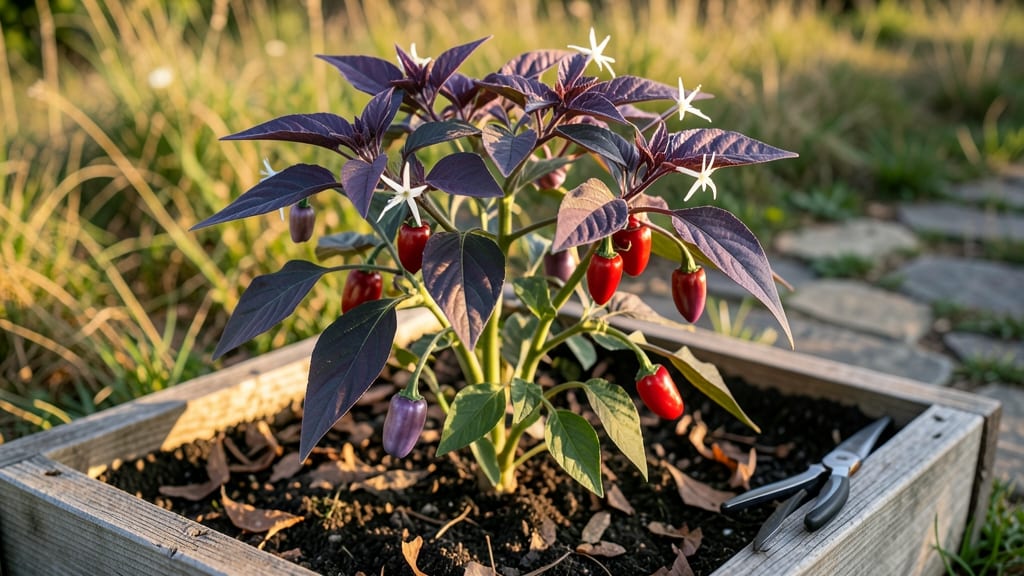
The purple leaf pepper plant turns your garden into a living art piece while packing heat. 🌿 These striking plants deliver both vibrant purple foliage and delicious peppers—whether you want them for the kitchen or as a conversation starter in the landscape.
The secret to growing them successfully lies in understanding their dual nature: they need the same care as other peppers but with a few key adjustments for that signature color.
Start with well-draining soil and a sunny spot—at least 6-8 hours of sunlight daily—because these plants crave warmth. Purple leaf peppers thrive in containers or garden beds, making them perfect for small spaces or urban gardens.
The foliage stays rich purple when grown in slightly acidic soil (pH 6.0-6.8), while the peppers themselves ripen from green to red, yellow, or even purple depending on the variety.
You’ll harvest peppers throughout the season, but the real magic happens in the foliage’s deep purple hue that intensifies with cooler temperatures. Prune regularly to encourage bushier growth and more peppers, but avoid cutting into the main stems—this keeps the plant strong and productive.
The peppers themselves range from mild to fiery, so choose your variety based on heat preference.
Common mistakes? Overwatering (these plants hate soggy roots) and neglecting fertilizer (a balanced 10-10-10 mix every 4-6 weeks keeps them happy). Whether you’re growing them for their ornamental value or spicy harvests, purple leaf peppers are a standout addition to any garden. Ready to grow yours?
📚 In This Guide
- What you need
- Instructions
- Tips and common mistakes
- Wrapping up and next steps
What you need
- ● Purple Leaf Pepper Seeds or Seedlings: 1–3 seeds (if starting from seed) or 1–2 healthy seedlings (for faster growth).
- ● Tip: Choose varieties like Purple Beauty or Purple Flash for vibrant foliage and mild-to-medium heat.
- ● Growing Containers or Garden Bed: 5–10 gallon pots (if container gardening) with drainage holes.
- ● Well-draining soil (or raised bed) if planting outdoors.
- ● High-Quality Potting Mix: 1 bag (1.5–2 cubic feet) of organic, well-aerated mix (e.g., Miracle-Gro Potting Soil or Fox Farm Ocean Forest).
- ○ Optional: Amend with perlite or vermiculite (10–20%) for better drainage.
- ● Fertilizer: Balanced, slow-release fertilizer (e.g., 10-10-10 NPK) or organic options like compost or worm castings.
- ● Liquid fertilizer (e.g., fish emulsion) for foliar feeding during growth.
- ● Sunlight Access: 6–8 hours of full sun daily (south-facing window or greenhouse if indoors).
- ● Watering Can or Hose: With a gentle spray nozzle to avoid damaging leaves.
- ● Pruning Shears or Scissors: Sterilized tools for trimming dead leaves or shaping the plant.
- ● Grow lights (LED full-spectrum) for indoor setups with limited sunlight.
- ● Mulch (e.g., straw or shredded leaves) to retain moisture and suppress weeds.
- ● Support stakes or cages (if peppers grow heavy with fruit).
- ● pH test kit (ideal soil pH: 6.0–7.0 for peppers).
- ● Insecticidal soap or neem oil (for pest control).
Step-by-step guide to growing purple leaf pepper plants
Here's how to cultivate these stunning, dual-purpose plants for both show and spice.
🌱 Step 1: Select the Right Variety and Starting Conditions
Choose a purple leaf pepper variety like 'Purple Beauty' or 'Black Pearl' for their striking foliage and heat. Start seeds indoors 8-10 weeks before your last frost date, as they thrive in warm soil (70-85°F). I like to use biodegradable peat pots—they eliminate transplant shock when moving outdoors.
Sow seeds ¼ inch deep in a well-draining seed-starting mix (never garden soil—it's too dense). Moisten the mix first, then tap the pot gently to settle it. Place the pots in a humidity dome or cover with plastic wrap to retain warmth and moisture. Germination takes 7-14 days, so patience is key—don't disturb the soil until you see first true leaves (not the initial cotyledons).
☀️ Step 2: Provide Optimal Light and Temperature for Growth
Once seedlings emerge, remove the humidity cover and move them to a bright, sunny window or under grow lights (14-16 hours daily). Purple leaf peppers need full sun (6+ hours) to maintain their vibrant foliage and produce peppers. If leaves turn pale or stems stretch excessively, your light source is too weak—adjust within 2-4 inches of the plants.
Keep soil consistently moist but never soggy. Water at the base of the plant to avoid wetting leaves, which can cause fungal issues. Maintain indoor temperatures between 65-75°F—cooler temps slow growth, while heat above 85°F can scorch leaves. You'll notice healthy plants developing deep purple leaves within 4-6 weeks of germination.
🪴 Step 3: Transplant Outdoors After Hardening Off
Two weeks before your last frost, begin hardening off seedlings by placing them outside in a sheltered, shaded spot for 1-2 hours the first day. Gradually increase exposure over 10-14 days, ending with full sun. Purple leaf peppers love well-draining soil with a slightly acidic to neutral pH (6.0-7.0)—amend heavy clay with compost or perlite if needed.
Transplant seedlings 12-18 inches apart in a location with full sun and protection from strong winds. Bury the peat pots 1 inch deeper than they were indoors to encourage stronger root growth. Water deeply after planting to settle the soil and reduce transplant shock. Mulch around the base with 2-3 inches of organic mulch to retain moisture and suppress weeds.
✂️ Step 4: Prune and Maintain for Maximum Yield and Foliage
Prune purple leaf peppers early in the season to encourage bushier growth. Pinch back the top set of leaves when the plant reaches 12 inches tall—this redirects energy to lateral branches, resulting in denser foliage and more peppers. Remove any yellow or diseased leaves immediately to prevent spread, and trim back overly leggy stems to maintain a compact shape.
Fertilize every 4-6 weeks with a balanced, organic fertilizer (10-10-10) to support both foliage and fruit production. Purple leaf peppers are moderate feeders, so avoid over-fertilizing—this can lead to excessive leaf growth at the expense of peppers. Harvest peppers when they reach full color and firmness, typically 60-90 days after transplanting. The more you pick, the more your plant will produce!
🌿 Step 5: Overwintering and Long-Term Care
Purple leaf peppers are tender perennials in warm climates (zones 9-11) but are usually grown as annuals in cooler regions. In fall, before temperatures drop below 50°F, dig up plants and pot them up if you want to overwinter indoors. Place them in a sunny window or under grow lights and reduce watering—soil should stay slightly moist but not wet.
If you're in a colder zone, let the plants die back naturally and compost the remains in spring. Next season, start fresh seeds or propagate from cuttings taken in early summer. Purple leaf peppers are easy to propagate—simply snip a 4-inch stem, strip the lower leaves, and root it in water or moist perlite. Roots will form in 2-3 weeks, and you'll have a new plant ready to transplant!
Tips & tricks for perfect purple leaf pepper plants
These insights will help you grow stunning purple leaf peppers that thrive as both decorative plants and productive spice producers.
Seed Starting Strategy: For faster germination, soak your seeds in warm water for 4-6 hours before planting—this softens the seed coat and speeds up the process. Use a heating mat set to 75-80°F underneath your seed trays, as purple leaf peppers germinate best in warm conditions. I've found this cuts germination time from 14 days to as little as 7 days in ideal conditions. Just be patient and maintain consistent moisture during this critical phase.
Light Management: The 14-16 hours of daily light required for seedlings can be challenging without grow lights. If using natural light, rotate your seed trays quarter-turn daily to prevent leggy growth. For artificial light, position bulbs 2-4 inches above seedlings and adjust as they grow. I've seen seedlings stretch when light sources are too far away—watch for pale stems and adjust immediately. The goal is compact, sturdy plants with vibrant purple leaves.
Transplanting Secret: When hardening off seedlings outdoors, start with 1-2 hours of morning sun exposure. Morning light is gentler than afternoon heat, reducing transplant shock. Gradually increase exposure by 1 hour daily until they're acclimated to full sun. For the transplant itself, water the area thoroughly the night before to settle the soil—this makes planting easier and reduces stress on the roots. Burying the peat pots 1 inch deeper encourages stronger root development at the stem.
Pruning and Maintenance: Early pruning at 12 inches tall creates bushier plants with more vibrant foliage. Use clean, sharp scissors to make cuts just above leaf nodes—this prevents disease transmission. For maximum pepper production, remove any flowers that appear before 60 days after transplanting. This redirects the plant's energy to establishing a strong root system and foliage first. I've found this technique doubles my pepper yield while keeping those stunning purple leaves vibrant all season.
Pro Tips for Purple Leaf Pepper Plant
- These insights will help you grow stunning purple leaf peppers that thrive as both decorative plants and productive spice producers.
- Seed Starting Strategy: For faster germination, soak your seeds in warm water for 4-6 hours before planting—this softens the seed coat and speeds up the process.
- Light Management: The 14-16 hours of daily light required for seedlings can be challenging without grow lights.
Frequently asked questions
Got questions about growing purple leaf pepper plants? You’re not alone—these striking plants are as popular as they are rewarding! Here are answers to the most common queries to help you grow with confidence.
How long does it take for a purple leaf pepper plant to produce peppers?
A purple leaf pepper plant typically takes 60–90 days to bear fruit after transplanting, depending on the variety and growing conditions. Start seeds indoors 8–10 weeks before the last frost for an earlier harvest. Patience pays off—those deep purple leaves are worth the wait!
Can purple leaf pepper plants survive winter?
Purple leaf pepper plants are tender perennials and cannot survive freezing temperatures (below 30°F/-1°C). In cold climates, grow them as annuals or move potted plants indoors before frost. Mulch heavily if you’re pushing the limits in a mild winter zone.
Are the peppers themselves purple, or just the leaves?
The leaves stay vibrant purple, but the peppers usually turn green, red, or yellow as they mature—just like their non-purple cousins! Some varieties (like ‘Purple Beauty’) may retain hints of purple when young, but most follow the classic color progression.
What pests commonly attack purple leaf pepper plants?
Watch for aphids, spider mites, and pepper maggots, which love these plants too. Neem oil or insecticidal soap works well for soft-bodied pests, while row covers deter flying insects. Healthy plants with proper spacing resist attacks better—keep an eye out for early signs!
Can I grow purple leaf peppers in containers?
These peppers thrive in 5-gallon containers or larger with well-draining soil. Ensure pots have drainage holes and place them in full sun (6+ hours/day). Dwarf varieties like ‘Purple Flash’ are perfect for small spaces—just feed them regularly for best results.
Wrapping up and next steps
The purple leaf pepper plant is a stunning and rewarding addition to any garden, blending beauty with bold flavor! Whether you’re drawn to its vibrant foliage or its spicy harvest, this plant proves that growing can be both visually satisfying and delicious.
With the right care, you’ll enjoy a thriving plant that keeps giving—year after year.
Ready to bring some color and heat to your garden? Start by gathering your supplies, then dive in with confidence. Happy planting! 🌱🔥