
Picking
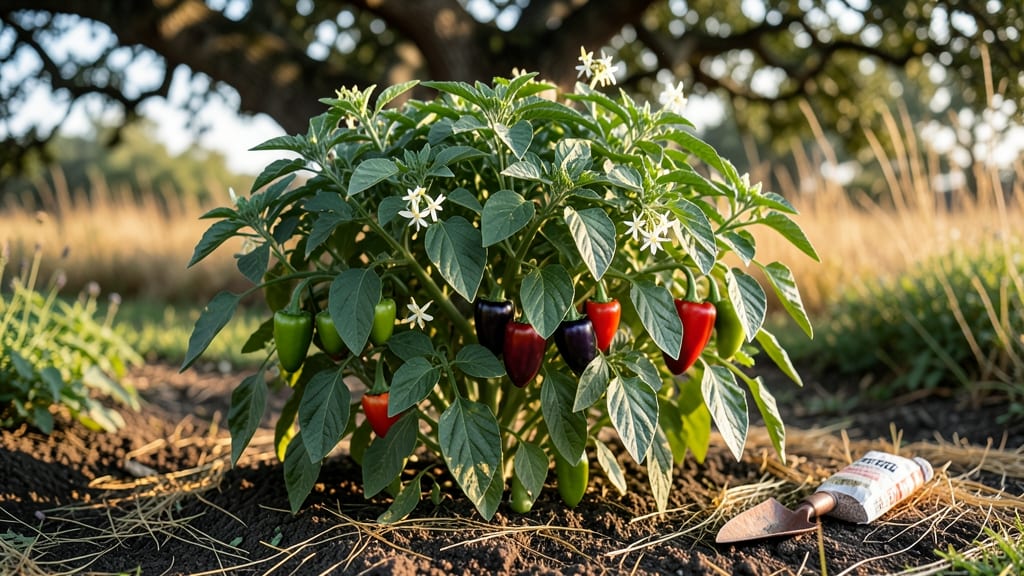
Jalapeños begin their life as bright green pods due to chlorophyll, the pigment responsible for their initial color. 🌱 As they mature, chlorophyll breaks down, revealing underlying carotenoids that create the spectrum of reds, oranges, and yellows.
The red stage isn't just about aesthetics—it's when capsaicin (the compound that gives peppers their heat) peaks, making red jalapeños ideal for dishes where you want bold flavor. Interestingly, some varieties develop brown or even purple hues as they age, adding another layer of visual appeal to your harvest.
Harvest timing matters too. Green jalapeños are milder and crisp, perfect for pickling or fresh salsas, while red ones pack more heat and a sweeter, fruitier taste. If left too long on the vine, peppers may turn wrinkled or develop soft spots, signaling overripeness.
For the best balance of heat and texture, aim to pick them when they're fully colored but still firm to the touch.
💡 In This Article
- Jalapeño Pepper Ripening Process Explained
- Best Jalapeño Colors for Harvesting and Flavor
Jalapeño pepper ripening process explained
The color transformation in jalapeño peppers begins with chlorophyll, the green pigment that dominates when peppers are immature. This pigment absorbs sunlight to power photosynthesis, giving young peppers their characteristic bright green hue.
As the pepper matures, the plant shifts its energy from growth to ripening, triggering the breakdown of chlorophyll through a process called degradation. 🔥 This biochemical change reveals the underlying pigments that were masked by the green.
Once chlorophyll fades, carotenoids—orange, yellow, and red pigments—take over, creating the vibrant colors we associate with ripe jalapeños. The specific shade depends on the balance of carotenoid types: lycopene (red), beta-carotene (orange), and xanthophylls (yellow).
For example, red jalapeños have high lycopene levels, while yellow varieties often contain more xanthophylls. Sunlight exposure accelerates this process, as UV rays boost carotenoid production, deepening the color faster in sunny climates.
This pigment shift isn’t just about appearance—it’s tied to flavor development. As chlorophyll breaks down, the pepper’s capsaicin content (the compound responsible for heat) increases, peaking in fully ripe, red jalapeños.
A study from the Journal of Agricultural and Food Chemistry found that red jalapeños contain up to 30% more capsaicin than green ones, explaining why they pack a stronger kick. Temperature also plays a role: cooler nights slow ripening, while warm days speed up pigment changes and heat production.
Not all jalapeños follow the same path. Some varieties develop brown or even purple hues due to anthocyanins, pigments that form in response to stress or specific growing conditions.
These variations add visual interest but don’t necessarily indicate overripeness—though wrinkled skin or soft spots are clear signs the pepper has passed its prime. The key is monitoring the pepper’s firmness and color intensity, as these give the most reliable cues about ripeness and flavor potential.
Understanding this process helps gardeners and chefs alike. For instance, if you’re growing jalapeños for pickling, harvesting them green ensures a milder, crisper texture. But if you’re aiming for salsas or dishes where heat is desired, waiting for the red stage maximizes both flavor and spiciness.
The ripening timeline can vary by 2-4 weeks depending on climate, so patience pays off for the best results. 🌟
Fun fact: The red color isn’t just about ripeness—it’s also a signal to birds and animals that the pepper is ripe and ready to be dispersed. While this doesn’t affect humans, it’s a clever evolutionary trick that ensures the plant’s seeds get spread far and wide!
This natural process is why ripe jalapeños often attract more attention in markets and gardens alike.