
Vegetables
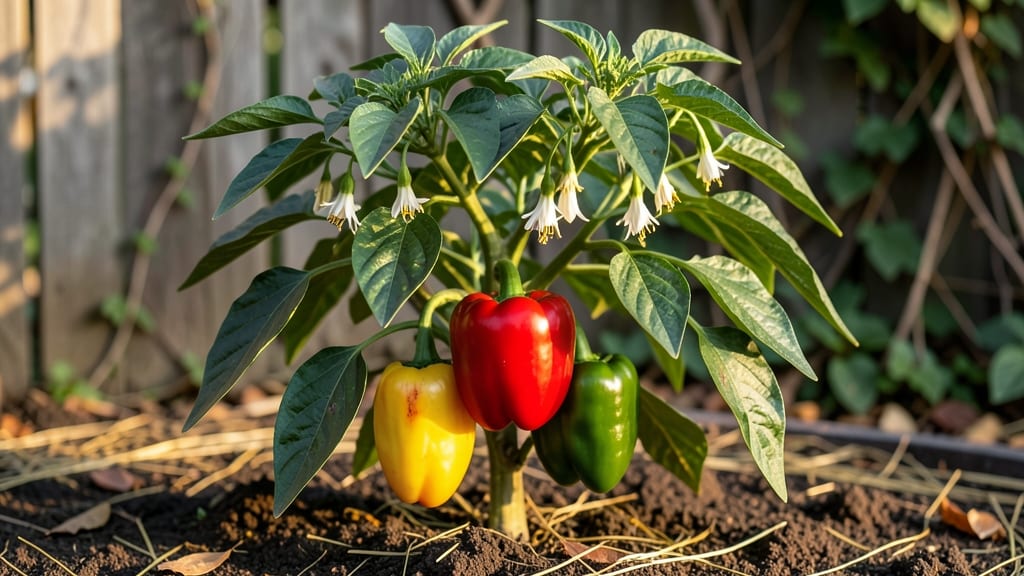
Bell peppers are self-pollinating plants, meaning they can produce fruit without needing cross-pollination from other plants. Their flowers contain both male and female reproductive parts, allowing fertilization to occur naturally even when grown in isolation.
This natural pollination process happens when pollen from a flower's anthers transfers to its own stigma, a mechanism that works particularly well in controlled environments like home gardens. 🌱 While bees and wind can enhance fertilization, bell peppers often set fruit reliably without external help—especially in warm, stable conditions.
The key advantage for growers is reduced dependency on pollinators, making them ideal for small spaces or containers where insect activity might be limited.
What's interesting is how temperature plays a role: bell peppers typically pollinate best between 70-85°F, with lower humidity improving success rates. This explains why some gardeners in cooler climates may need to hand-pollinate occasionally.
The plant's bisexual flowers also mean you can grow multiple varieties together without worrying about cross-contamination between colors or shapes.
💡 In This Article
- How Bell Pepper Pollination Works Naturally
- Tips for Maximizing Bell Pepper Fruit Set in Gardens
How bell pepper pollination works naturally
Bell pepper flowers are perfect examples of bisexual blooms, meaning each flower contains both male (anthers) and female (stigma) reproductive parts. When the flower opens—typically in the morning—the anthers release pollen that naturally lands on the stigma of the same flower.
This self-pollination mechanism is highly efficient, with success rates often exceeding 90% under ideal conditions. The process relies on gentle vibrations from wind or visiting insects, which dislodge pollen while the flower remains closed at night to prevent premature drying.
The timing of pollen release is critical: bell pepper flowers usually open between 8:00 AM and 10:00 AM when temperatures are between 70-85°F. Humidity below 60% improves pollen viability, while high humidity can cause the stigma to become sticky and trap pollen less effectively.
In controlled environments like greenhouses, this natural process occurs reliably, but outdoor growers may notice reduced fruit set during cool (60°F) or rainy periods when pollen doesn't transfer as efficiently. 🌞 The plant's ability to self-pollinate makes it uniquely adaptable to various growing conditions.
What sets bell peppers apart from many other crops is their lack of reliance on cross-pollination between plants. Unlike tomatoes or squash, which require separate male and female flowers, bell peppers can produce fruit even when grown alone.
This independence is why they thrive in containers or small urban gardens where pollinators like bees might be scarce. The plant's natural mechanism ensures fertilization happens regardless of external factors, though wind or insects can still boost success rates by 15-20% in optimal conditions.
For gardeners curious about the science, the pollen transfer process involves electrostatic forces—the pollen grains carry a positive charge that attracts them to the negatively charged stigma. This natural attraction explains why even gentle air currents can facilitate fertilization.
The flower's structure also plays a role: the anthers hang just above the stigma, creating an ideal path for pollen to fall directly onto the receptive surface when the flower vibrates. This design minimizes waste and maximizes efficiency in resource-limited environments.
One fascinating aspect is how bell peppers adapt their pollination strategy based on environmental cues. In hot, dry conditions, the flowers may open earlier to take advantage of morning humidity, while cooler weather can delay opening until temperatures rise. This flexibility ensures pollination occurs even when external conditions aren't perfect.
The plant's ability to self-regulate makes it remarkably resilient compared to crops that depend entirely on external pollinators. 🌱 This natural adaptability is why bell peppers remain a favorite among home gardeners worldwide.