
Plants
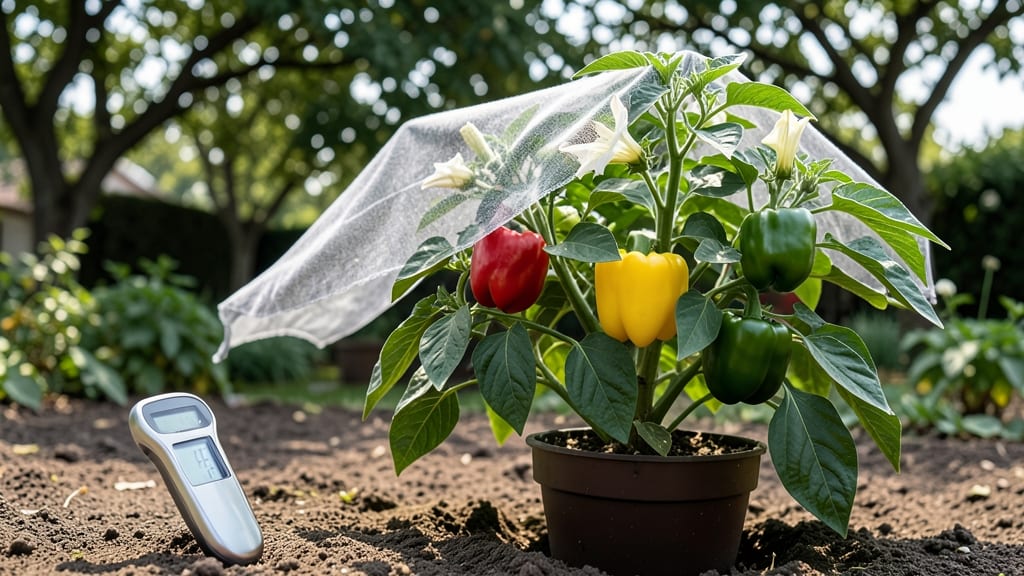
Pepper plants cannot survive frost, as temperatures below 32°F (0°C) cause irreversible damage to their tender foliage and roots, leading to blackened leaves and stunted growth. Mulching or bringing potted plants indoors before frost is critical to prevent death.
Frost hits pepper plants hard because their tropical origins make them extremely sensitive to cold. 🌱 When temperatures drop below 32°F (0°C), ice crystals form in the plant's cells, rupturing them and blocking water transport.
Even a light frost can kill a pepper plant within hours, but young plants or those in early growth stages may show signs of recovery if damage is minimal. The key is prevention—covering plants with frost cloth or moving containers indoors before the first frost warning is your best defense.
If you catch frost damage early, you might still save your peppers. Prune any blackened leaves immediately to prevent disease, and avoid fertilizing until new growth appears.
Reduce watering slightly to help the roots recover, and watch for new shoots—these are your plant's way of telling you it's fighting back. 💪
💡 In This Article
- Pepper Plant Frost Damage: Temperature Thresholds and Cellular Impact
- Protecting Peppers from Frost: Preemptive and Emergency Strategies
Pepper plant frost damage: temperature thresholds and cellular impact
Pepper plants originate from tropical regions where temperatures rarely drop below 60°F (15°C), making them highly susceptible to frost damage. When temperatures fall to 32°F (0°C), ice crystals begin forming in the plant's cell walls—a process called extracellular freezing.
These sharp crystals puncture cell membranes, causing irreversible damage to the delicate vascular system that transports water and nutrients. 🌡️ At 28°F (-2°C) or lower, intracellular freezing occurs, where ice forms inside cells, completely disrupting their function and leading to rapid cell death.
The duration of exposure matters just as much as the temperature. A brief dip to 32°F (0°C) might cause superficial damage like brown leaf edges, while prolonged exposure below 28°F (-2°C) can kill the entire plant within 2-4 hours.
Peppers also suffer from oxidative stress during frost, as their cellular repair mechanisms fail under cold shock. This stress manifests as blackened, mushy foliage and stunted growth, even if the plant appears to recover temporarily. 🌱
Photosynthesis halts almost immediately when temperatures drop below 50°F (10°C), leaving the plant unable to produce energy. Without energy, the plant can't sustain critical functions like root growth or nutrient absorption.
Even if the above-ground parts survive a light frost, the roots may remain damaged, preventing the plant from absorbing water and nutrients effectively—a condition known as "root lock." This often leads to wilting or death even after temperatures rise.
Young pepper plants are slightly more resilient than mature ones because their smaller size allows them to warm up faster.
However, their roots are still shallow, making them vulnerable to soil temperature drops. 🌱 For example, a 3-inch pot of pepper seedlings might survive a 30°F (-1°C) night if the container is insulated, while a 12-inch pot of a mature plant would likely suffer severe damage.
The key difference lies in the plant's ability to regulate its internal temperature and the speed at which frost penetrates the root zone.
Recovery potential depends on how quickly the plant can repair damaged cells. Peppers may produce new growth from the base if the crown (where stems meet roots) remains intact and undamaged. However, if the frost penetrates below the soil surface, the roots may not recover at all.
This is why gardeners often see new shoots emerge from the base of a frost-damaged pepper plant—it’s the plant’s last-ditch effort to regenerate before the damage becomes permanent. 💪
To assess frost damage, examine the plant’s leaves and stems. Healthy green leaves indicate minimal damage, while blackened or mushy foliage signals severe cell death. If the plant’s center (where new growth emerges) is still firm and green, there’s a chance it can recover with proper care.
However, if the entire plant turns black or feels soft to the touch, it’s likely beyond saving. 🌿