
Picking
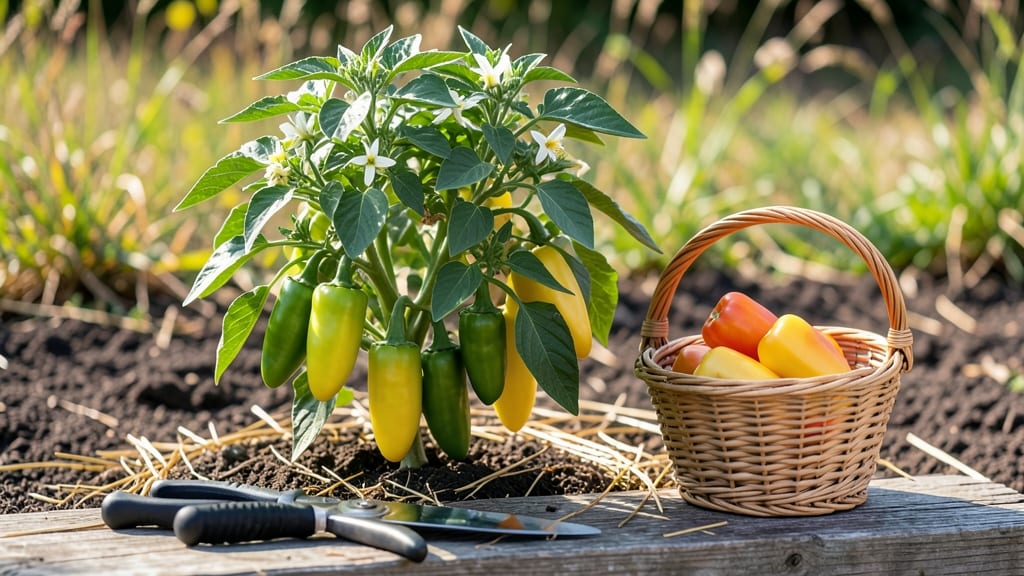
The hot banana pepper's Scoville heat level ranges from 50,000–100,000 SHU, making it a medium-spicy pepper that packs more punch than jalapeños but nothing like the fiery intensity of habaneros or ghost peppers. Its flavor combines fruity sweetness with a subtle smoky undertone.
The Scoville scale measures capsaicin concentration, and hot banana peppers land squarely in the mid-range, offering a noticeable kick without overwhelming heat. 🔥 This makes them perfect for dishes where you want to add spice without dominating the flavor profile.
They're often used in salsas, pickles, or as a heat boost in sauces where their fruity notes can shine through.
What's interesting is how their heat develops—young peppers are milder, while fully mature ones reach their peak spiciness. This means timing your harvest can give you more control over the final heat level in your dishes.
Many gardeners swear by growing them in well-draining soil with plenty of sunlight to maximize both their heat and sweetness.
💡 In This Article
- How Hot Banana Peppers Compare to Other Peppers on the Scoville Scale
- Growing Hot Banana Peppers: Tips for Cultivating Maximum Heat and Flavor
How hot banana peppers compare to other peppers on the Scoville scale
The hot banana pepper's position on the Scoville scale—50,000–100,000 SHU—might seem misleading at first glance, given its name suggests extreme heat. In reality, it sits comfortably between jalapeños (2,500–8,000 SHU) and serranos (10,000–23,000 SHU), offering a balanced heat that's neither overwhelming nor subtle.
This mid-range spiciness allows its fruity, almost banana-like sweetness to shine through without being overshadowed by capsaicin's burn. 🔥
To put this into perspective, a hot banana pepper contains roughly 5–10 times more capsaicin than a jalapeño, but only about 1/10th the heat of a habanero (100,000–350,000 SHU).
The key difference lies in how capsaicin is distributed within the pepper's flesh—hot banana peppers have a more even spread, meaning every bite delivers consistent heat rather than concentrated pockets of intensity. This makes them ideal for dishes where you want gradual, building spice rather than sudden bursts.
The pepper's name is a bit of a misnomer, as it doesn't resemble a banana in shape or flavor—its heat level is what earned it the "hot" prefix.
Visually, it's small and oblong with a glossy, yellow-orange skin when ripe, and its flesh is thin-walled with a texture that's slightly waxy yet tender. The smoky undertones develop when cooked, which is why they're often roasted or pickled to enhance their complex flavor profile.
Unlike ghost peppers (855,000–2,200,000 SHU), which deliver a lingering, almost painful heat, hot banana peppers offer a cleaner, more refined spice.
What's fascinating about the Scoville scale is how subjective heat perception can be—someone sensitive to capsaicin might find a hot banana pepper challenging, while others with higher tolerance thresholds might barely notice the heat.
This variability is why chefs often use them in ratios (e.g., 1–2 peppers per batch of salsa) rather than relying on them as the sole heat source.
Their 50,000–100,000 SHU range also makes them a great "training wheel" for those new to spicy foods, as they introduce heat without the extreme intensity of higher-ranking peppers.
For a real-world comparison, imagine blending a hot banana pepper into a pasta sauce—you'd need roughly 3–4 times more jalapeños to achieve the same level of heat, but the banana pepper would contribute a brighter, more aromatic depth.
This is why they're so popular in Latin American and Caribbean cuisines, where their heat is balanced by sweet ingredients like pineapple or mango. The pepper's capsaicin content is also more evenly distributed, meaning you're less likely to encounter a "hot spot" that ruins the dish. ✨
One common mistake is assuming all banana peppers are equally hot—actually, their Scoville rating can vary based on growing conditions. Peppers grown in warmer climates with more sunlight tend to develop higher capsaicin levels, while those in cooler regions may lean milder.
This is why some gardeners swear by starting seeds indoors and transplanting only after the last frost, ensuring optimal heat development. The pepper's heat also peaks as it matures, so harvesting at the right stage (usually when fully colored) is key to achieving that perfect 50,000–100,000 SHU balance.
If you're experimenting with heat levels in your cooking, consider this rule of thumb: 1 hot banana pepper ≈ 2–3 serranos ≈ 5–6 jalapeños in terms of capsaicin content.
This equivalence helps when substituting peppers in recipes, though flavor profiles will differ—hot banana peppers bring a fruity brightness, while serranos add a grassier note.
For a visual aid, think of the Scoville scale as a ladder: hot banana peppers occupy the 5th rung (out of 10), making them a reliable middle-ground option for most culinary applications. 🌶️