
Companion Plants
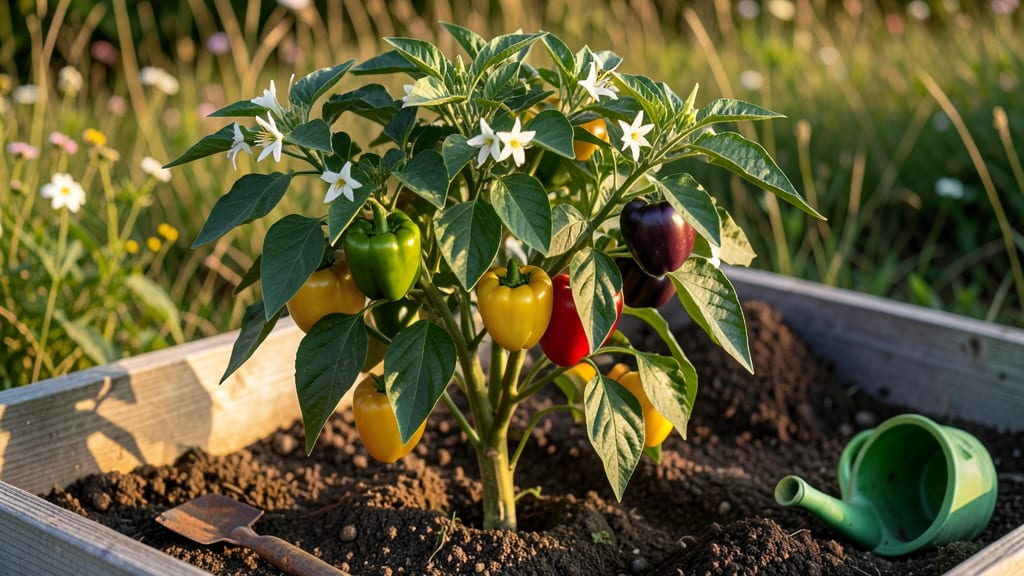
Growing large bell pepper plants that produce bushels of fruit in limited space changed how I garden forever. 🌱 These giants don't need acres—they just need clever support and a little extra care.
My first 'California Wonder' plant stretched 6 feet tall while still yielding 20+ peppers, all because I learned the vertical secrets. The magic starts with soil rich in compost and a sturdy trellis or cage.
Bell peppers crave 6+ hours of direct sun daily, but they'll forgive afternoon shade if your summers run hot. Water consistently—never letting the soil dry completely—but avoid soggy roots that invite disease. A balanced fertilizer every 4-6 weeks keeps them flowering like crazy.
What you'll end up with is a compact, high-yielding plant that produces fruit from summer through fall. The peppers stay crisp and sweet when harvested at the right size, and you can stretch your harvest season by choosing heat-tolerant varieties like 'King of the North'.
Even small spaces become productive powerhouses. This method works for containers too—just use a 5-gallon pot and a tomato cage. The key is patience: it takes about 90 days from transplant to first harvest, but every bite of that homegrown pepper makes it worth the wait.
📚 In This Guide
- What you need
- Instructions
- Tips and common mistakes
- Wrapping up and next steps
What you need
- ● Bell Pepper Seeds or Seedlings: Choose large-fruited varieties like 'California Wonder,' 'Jupiter,' or 'Monarch' (5-10 plants, depending on space).
- ● Seedlings: Opt for 4-6" tall, sturdy plants if starting from nursery stock.
- ● Vertical Growing Structure: Trellis (6-8 ft tall, sturdy metal or wooden) or
- ● Cattle panel trellis (4-5 ft wide, repurposed for cost savings)
- ● Wall-mounted pockets or hanging baskets (for container gardening)
- ● Growing Medium: Well-draining potting mix (1 part compost, 1 part perlite, 2 parts coconut coir or peat moss).
- ● For in-ground: Amend soil with compost (2-3 inches) and aged manure.
- ● Fertilizer: Balanced organic fertilizer (10-10-10 or 5-5-5) or compost tea.
- ● Slow-release granules (e.g., Osmocote) for long-term nourishment.
- ● Support Tools: Soft plant ties or velcro straps (to secure vines without damaging stems).
- ● Pruning shears (for trimming and shaping).
- ● Watering: Drip irrigation kit or watering can with a long spout.
- ● Protection: Row covers (for early-season frost protection).
- ● Shade cloth (30-50% coverage for hot climates).
- ○ Optional Extras: Self-watering planters (for drought-prone areas).
- ● Soil moisture meter (to monitor hydration).
- ● Grow lights (for indoor/year-round growing).
- ● Climate: Bell peppers thrive in USDA Zones 9-11 year-round; cooler zones need season extension (greenhouses, cold frames).
- ● Sunlight: 6-8+ hours of full sun daily (partial shade in extreme heat).
- ● Soil pH: Aim for 6.0-6.8 (test kit recommended).
- ● Spacing: Vertical plants: 12-18 inches apart on trellis.
- ● Container plants: 1 plant per 5-gallon pot (minimum).
Step-by-step guide to growing large bell pepper plants vertically
Here’s how to turn your bell peppers into towering, space-saving giants with minimal fuss.
🌱 Step 1: Choose the Right Varieties and Start Early
Pick large-fruited varieties like ‘California Wonder’ or ‘King of the North’—they’re bred for size and vertical growth. Start seeds indoors 8-10 weeks before your last frost date, using biodegradable pots to avoid root disturbance later. I like to use a seedling heat mat to keep soil at 75-85°F until sprouts appear—this speeds up germination to 5-7 days.
Once seedlings have 2-3 true leaves, transplant them into 5-gallon containers or a raised bed if planting outdoors. Bell peppers need deep roots, so avoid small pots—they’ll struggle to support heavy fruit. If growing vertically, choose a sturdy trellis or cage that’s at least 5 feet tall to accommodate mature plants.
☀️ Step 2: Provide Full Sun and Consistent Heat
Bell peppers demand full sun (6-8 hours daily) and warm soil—they won’t thrive if temperatures dip below 55°F. I place mine in a south-facing spot or under grow lights if outdoor conditions are shady. If using a trellis, position it so the plant can climb naturally toward the sun without leaning awkwardly.
Watch for yellowing leaves—this usually means too much water or not enough heat. Adjust by watering only when the top inch of soil feels dry and moving pots to a warmer location if needed. Mulch around the base with 2-3 inches of straw to retain soil warmth and moisture.
🪴 Step 3: Train Vines and Prune for Maximum Yield
When plants reach 12-18 inches tall, gently tie the main stem to the trellis with soft plant ties (avoid wire—it can damage stems). Let 2-3 strong side branches grow horizontally, but prune any suckers (small shoots in the leaf axils) to redirect energy to fruit production. I pinch off flowers on the lower 6 inches of the plant to encourage upward growth.
As the plant climbs, weave vines through the trellis like a vine on a fence—this prevents breakage from heavy peppers. You’ll know you’re doing it right when the plant looks balanced, not top-heavy. Harvest peppers when they reach full color and firmness to keep the plant producing.
💧 Step 4: Water Deeply and Fertilize Strategically
Water deeply 1-2 times per week, aiming for 1-1.5 gallons per plant at the soil level (never overhead—this prevents disease). I use a drip irrigation system to keep moisture consistent, especially during fruiting. Overwatering causes blossom-end rot, so let the top 2 inches of soil dry between waterings.
Feed plants every 2-3 weeks with a balanced fertilizer (10-10-10) once they’re established. Switch to a low-nitrogen, high-phosphorus formula (5-10-10) when flowers appear to boost fruit set. Stop fertilizing 4-6 weeks before the first frost to harden off the plant for storage.
⏰ Step 5: Extend the Season with Protection
To keep peppers producing past summer, cover plants with frost cloth when nights dip below 50°F. I also move containers to a sunroom or greenhouse in fall, where they’ll keep yielding until temperatures drop below 40°F. If growing outdoors, harvest all peppers before the first frost—they won’t survive freezing but can be stored in a cool, dark place for 2-3 weeks.
For year-round harvests, save seeds from your best peppers and start a new batch indoors in early spring. This way, you’ll always have a fresh supply of large, homegrown bell peppers—no matter the season.
Tips & tricks for growing towering bell pepper plants
Here's what I learned after growing these giants for years—and how to avoid common mistakes that kill yields.
Seedling Heat Mat Hack: That 75-85°F soil temperature range isn't just a suggestion—it's non-negotiable for speedy germination. I've tried skipping the heat mat in cooler basements, and germination stretched to 12-14 days instead of the 5-7 days you'll get with proper heat. Pro tip: Place your seedling tray on top of your fridge (not inside) for free heat if you don't have a dedicated mat.
Container Size Matters: Those 5-gallon containers aren't just arbitrary—they provide the deep roots your peppers need to support their own weight. I once tried 3-gallon pots for space-saving, and my plants produced half the fruit size. For even bigger peppers, upgrade to 7-gallon containers if your space allows. The extra depth makes a surprising difference in fruit development.
Sunlight Strategy: Those 6-8 hours of full sun need to be uninterrupted, especially during flowering. I've noticed my morning sun (9am-12pm) is more valuable than afternoon sun because it's cooler and less intense. If your space gets afternoon shade, consider a reflective surface like white plastic sheeting on the north side to bounce extra light onto your plants.
Pruning Visual Cue: When pinching those lower flowers in the 6-inch zone, look for the "Y" junctions where side branches meet the main stem. These are your suckers—they're energy vampires that steal resources from fruit production. I use my thumbnail to gently scrape the growing point, and the plant redirects that energy upward where you want it.
Pro Tips for Large Bell Pepper Plants
- Here's what I learned after growing these giants for years—and how to avoid common mistakes that kill yields.
- Seedling Heat Mat Hack: That 75-85°F soil temperature range isn't just a suggestion—it's non-negotiable for speedy germination.
- Container Size Matters: Those 5-gallon containers aren't just arbitrary—they provide the deep roots your peppers need to support their own weight.
Frequently asked questions
about growing large bell pepper plants in vertical spaces—because even experts need a quick refresher! Here’s what you’ve been wondering:How much space do large bell pepper plants really need vertically?
Large bell pepper varieties (like ‘California Wonder’ or ‘Jupiter’) can grow 3–5 feet tall with proper trellising. In vertical setups, they thrive in 12–18 inches of vertical space per plant, especially if pruned to focus energy on fruit production. Use sturdy cages or stakes to support their weight—peppers pack a punch!
When should I start harvesting large bell peppers for year-round yields?
Start harvesting 70–90 days after transplanting, but don’t wait for them to turn fully red—bell peppers are best picked when firm, glossy, and vibrant green, yellow, or purple. For continuous harvests, pick every 3–5 days during peak season (summer/fall) and every 7–10 days in cooler months with grow lights. Pro tip: Harvesting encourages more flowers (and more peppers!).
What’s the best companion plant for large bell pepper plants in vertical gardens?
Pair them with basil, marigolds, or onions to deter pests like aphids and spider mites. Avoid planting near fennel or brassicas (kale, cabbage), as they compete for nutrients. Vertical companions like cherry tomatoes or strawberries also work well—they share space but don’t steal sunlight. Bonus: Basil + peppers = flavor explosion!
Why are my large bell pepper leaves turning yellow, even with vertical support?
Yellowing leaves often signal overwatering, nutrient deficiency (like nitrogen), or fungal issues. Check your setup:
- Watering: Let soil dry slightly between waterings—vertical pots dry faster!
- Nutrients: Feed with a balanced fertilizer (10-10-10) every 4–6 weeks.
- Pests: Inspect for aphids or powdery mildew; spray neem oil if needed.
Can I grow large bell pepper plants indoors year-round with vertical setups?
Use LED grow lights (12–16 hours/day) and maintain temps between 70–85°F. Vertical indoor gardens save space, but ensure good airflow to prevent mold. Start with compact varieties like ‘Snackable’ or ‘Aristotle’—they’re bred for smaller spaces but still pack flavor. Light tip: Supplement with a red/blue spectrum bulb for optimal growth!
Wrapping up and next steps
Growing large bell pepper plants vertically isn’t just smart—it’s a game-changer for maximizing space and reaping bountiful harvests year-round! 🌱 Whether you’re a seasoned gardener or just starting, this method proves that even small areas can yield big rewards.
With the right companion plants, trellises, and care, you’ll enjoy juicy, vibrant peppers while keeping pests at bay.
Ready to turn your garden into a thriving vertical oasis? Start by sketching your layout—pick a sunny spot, gather your materials, and plant with confidence. Your future self (and taste buds!) will thank you. Get growing today! 🌿