
Watering
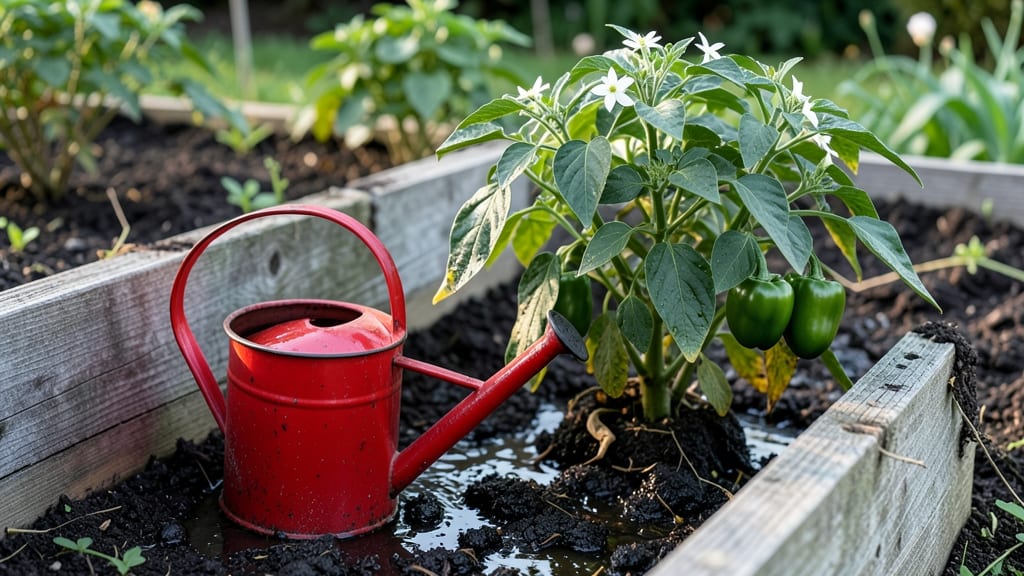
An overwatered pepper plant with drooping leaves and yellowing stems doesn’t spell the end of your harvest—it just means it’s time to dry things out. 🌱 I’ve nursed back more than a few soggy peppers by addressing the root (literally) of the problem: too much moisture, poor drainage. and stressed roots.
The good news? With the right steps, your plant can bounce back stronger than ever.
First, stop watering immediately and let the top 2-3 inches of soil dry out completely. Overwatered plants need air around their roots, not a swampy environment. Check the soil by sticking your finger in—if it’s damp past your first knuckle, wait another day.
You’ll also want to trim any black, mushy stems or leaves, as these are signs of rot spreading.
Once the soil is dry, repot if needed into a container with drainage holes and fresh, well-draining potting mix. Peppers thrive in soil that’s moist but never soggy—think of it like a wrung-out sponge.
Moving forward, water only when the top inch feels dry, and always use a pot with drainage to prevent future soggy soil.
Within a week, you should see new growth as the plant recovers. Keep it in bright, indirect light and avoid over-fertilizing, which can stress roots further. With consistent care, your peppers will rebound, and you’ll learn the exact watering rhythm your plants crave—no more guesswork.
Root Causes Of Excess Moisture
When your pepper plants start looking sad with droopy leaves or yellowing foliage, overwatering is often the sneaky culprit. But why does this happen? Let’s break down the science behind it—because understanding the root causes (literally!) helps you fix the problem fast.
Pepper plants thrive in well-draining soil, but if your garden beds or pots lack proper drainage, water pools around the roots instead of flowing away. This creates a soggy environment where roots can’t breathe.
- Clay-heavy soil compacts easily, trapping water and cutting off oxygen to roots.
- Containers without drainage holes turn into water traps, drowning roots over time.
- Compacted soil from foot traffic or poor aeration prevents excess water from escaping.
💡 Pro Tip: Test your soil’s drainage by filling a pot with water—if it drains in under 30 minutes, it’s good. If it sits for hours, amend with perlite or sand.
Even with good soil, watering on a strict schedule (like every day) can lead to oversaturation. Pepper plants need moisture, but their roots must dry out slightly between waterings to avoid rot.
- Automatic irrigation systems set on timers may overdeliver, especially in rainy weather.
- Mistaking thirst for wilting—pepper leaves droop when underwatered, but also when roots suffocate from too much water.
- Heavy rainfall without pause can drown plants if they’re not given time to recover.
✨ Quick Fix: Stick your finger 1–2 inches into the soil. If it’s damp, wait. If it’s bone-dry, water deeply—but only until excess drains out.
Humidity, shade, and even wind can turn your watering routine into a disaster if you’re not paying attention. Pepper plants in high-humidity climates or shaded spots stay wet longer, slowing evaporation.
- High humidity (above 70%) reduces evaporation, keeping soil damp for days.
- Shady or indoor growing (like on a windowsill) means less sunlight to dry the soil.
- Windbreaks or dense foliage can create microclimates where air doesn’t circulate, trapping moisture.
🌡️ Adjust Accordingly: Reduce watering frequency in humid areas and move pots to sunnier spots if possible. A small fan near plants can help with airflow!
Now that you know why your pepper plant is drowning, the next step is fixing it—without losing your harvest. Stay tuned for actionable recovery tips!
Reviving Your Pepper Plant Step by Step
Overwatering can feel like a death sentence for your pepper plants, but don’t panic—with the right approach, you can nurse them back to health and save your harvest. The key is acting fast, diagnosing the exact issue, and applying targeted fixes.
Below, we’ll break down practical solutions for common overwatering symptoms, plus prevention tips to keep your peppers thriving.
If your pepper plant’s leaves are turning yellow (especially the older ones), it’s likely suffering from root rot or nutrient leaching due to excess moisture. Here’s how to fix it:
🔥 Step 1: Stop Watering Immediately
- Let the soil dry out completely before watering again. Stick your finger 1–2 inches deep—if it’s damp, wait.
- Skip the top layer—focus on letting moisture evaporate from deeper soil where roots struggle.
🍳 Step 2: Improve Soil Drainage
- Repot if needed: If the soil is compacted or waterlogged, transfer your plant to a well-draining potting mix (add perlite, vermiculite, or coconut coir).
- Raise the pot: Place it on elevated trays or saucers to prevent water pooling at the bottom.
👨🍳 Step 3: Flush Out Excess Salts
Overwatering can leave harmful salts behind. Flush the soil with:
- 2–3 times the pot’s volume of water (let it drain freely).
- Add a mild acidifier (like 1 tsp apple cider vinegar per gallon) to balance pH.
🥘 Prevention Tips
- Water deeply but infrequently: Peppers prefer 1–1.5 inches of water per week (adjust for climate).
- Use self-watering pots sparingly: They can trap moisture—monitor soil moisture closely.
- Mulch properly: Apply 2–3 inches of organic mulch (straw or wood chips) to retain just enough moisture without suffocating roots.
If your plant looks limp or mushy, roots may be strangled by soggy soil. Act fast:
⏰ Step 1: Check Root Health
- Gently remove the plant from its pot and inspect the roots.
- Healthy roots: Firm, white or tan.
- Rotten roots: Black, mushy, or smelly.
- Trim away any black/mushy roots with sterilized scissors.
🔪 Step 2: Repot in Fresh, Aerated Soil
- Choose a slightly larger pot (1–2 inches wider) with drainage holes.
- Mix in amendments:
- 50% high-quality potting soil
- 30% perlite or pumice (for aeration)
- 20% compost (for nutrients)
- Plant at the same depth as before to avoid stress.
🌡️ Step 3: Adjust Humidity and Airflow
- Increase airflow: Place a small fan nearby (on low) to speed up evaporation.
- Reduce humidity: If your space is damp, use a dehumidifier or move the plant to a brighter, drier spot.
✨ Prevention Tips
- Avoid saucers without drainage: Always empty excess water after watering.
- Test soil moisture: Use a moisture meter or the finger test before watering.
- Choose the right pot: Terracotta pots dry faster than plastic—great for peppers!
If your pepper plant is leggy, weak, or not flowering, overwatering may be starving roots of oxygen and flushing out nutrients. Here’s how to revive it:
💡 Step 1: Fertilize Lightly
- Use a balanced, water-soluble fertilizer (10-10-10 or 5-5-5) diluted to half strength.
- Avoid nitrogen-heavy feeds—peppers need more phosphorus (P) and potassium (K) for flowers/fruit.
- Apply every 2–3 weeks once the plant recovers.
🎯 Step 2: Prune for Better Airflow
- Trim yellow or damaged leaves to redirect energy to healthy growth.
- Remove suckers (side shoots) to focus the plant’s energy on fruit production.
🌿 Prevention Tips
- Water in the morning: Lets foliage dry before nighttime humidity sets in.
- Mulch lightly: Helps soil retain just enough moisture without compacting.
- Rotate pots: Ensure even sunlight exposure to prevent weak, leggy growth.
If your plant is severely rotted (black stems, foul smell, wilting despite dry soil), you may need to propagate from healthy cuttings:
- Take 4–6 inch cuttings from green, disease-free stems.
- Dip in rooting hormone (optional but helpful).
- Plant in perlite or sand (keeps roots aerated).
- Keep humid and warm (use a plastic bag or propagator).
- Wait 2–4 weeks for roots to form before transplanting.
- 🔥 Monitor weather: Adjust watering for rainy days or high humidity.
- 🌡️ Use a thermometer: Peppers thrive at 70–85°F—extreme temps affect moisture needs.
- 🎯 Observe your plant: Adjust watering based on leaf color, wilting, and growth speed.
With these steps, your pepper plant should bounce back in 1–2 weeks. Stay patient, and soon you’ll be harvesting juicy, homegrown peppers—no more soggy soil in sight! 🌶️💚
Frequently asked questions
How do I know if my pepper plant is overwatered vs. underwatered?
Check the soil first—overwatered plants have soggy, compacted soil that smells musty, while underwatered plants have dry, cracked soil. Look at the leaves: yellowing with mushy stems means too much water, while crispy edges and drooping (but dry) leaves mean too little. Weigh the pot too—overwatered pots feel heavy from excess moisture.
Can I save a pepper plant with black, mushy stems?
It depends on how severe the rot is. If only a few stems are affected, trim them with sterilized scissors and repot in fresh, well-draining soil. For widespread rot, you may need to propagate from healthy cuttings. Start new plants in perlite or sand to prevent further rot while the original recovers.
Why does my pepper plant wilt after watering?
This usually means the roots can't absorb water due to rot or compacted soil. Let the soil dry completely, then repot in a mix with 30% perlite for aeration. Water only when the top 1 inch feels dry—peppers hate soggy roots! A small fan nearby can help speed up drying.
How often should I water peppers in pots vs. garden beds?
Potted peppers need water every 2-3 days in summer (when soil dries fast), while garden beds may only need 1-1.5 inches per week. Always check moisture—stick your finger 1-2 inches deep. Pots dry faster, so use terracotta containers and ensure they have drainage holes.
Will overwatering kill my pepper plant permanently?
Not always! If you catch it early (yellowing leaves, no black stems), your plant can recover with proper care. Severe cases with foul-smelling roots may require propagation from cuttings. The key is acting fast—stop watering immediately and improve drainage. Most peppers bounce back within 1-2 weeks with the right treatment.