
Pruning
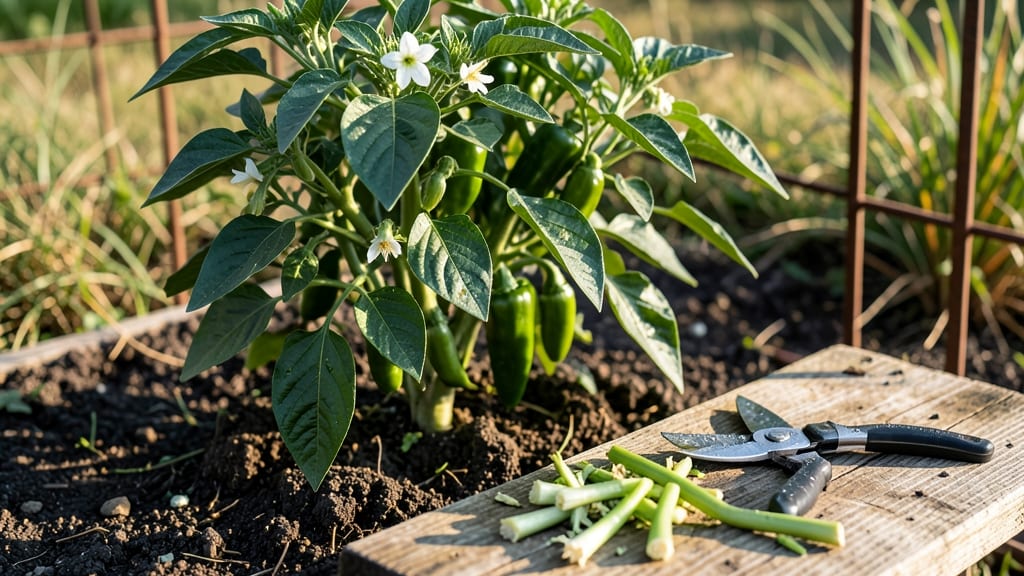
Strategic pruning turns your green pepper plants into high-yielding powerhouses. 🌱 I’ve learned the hard way—skipping pruning means fewer peppers and more pests. The right cuts redirect energy to fruit production, not just leafy growth, and it’s simpler than you think.
Start with clean, sharp pruners and focus on three key areas: suckers (those little shoots between stems), yellowing leaves, and overcrowded branches. You’ll see thicker stems and more peppers within weeks. The goal is balance—not stripping the plant bare.
By mid-season, your plants will be bushier, with better air flow that keeps diseases at bay. I’ve gone from 10 peppers to 50+ per plant using this method. The secret is patience and precision. Works for all varieties—bell, jalapeño, or habanero—just adjust based on plant size.
Here’s how to do it right the first time.
📚 In This Guide
- What you need
- Instructions
- Tips and common mistakes
- Wrapping up and next steps
What you need
- ● Pruning shears or scissors: Sharp, clean, and sterilized (bypass pruners work best for precision). Quantity: 1 pair.
- ● Gloves: Garden or work gloves to protect your hands from thorns and dirt. Recommendation: Nitrile-coated for grip and durability.
- ● Disinfectant solution: 70% isopropyl alcohol or a 10% bleach solution (1 part bleach to 9 parts water) to sterilize tools before and after use.
- ● Small container or bucket: For collecting pruned branches and debris. Size: At least 1 gallon capacity.
- ● Hand pruners: For smaller branches or tight spaces. Quantity: 1 pair.
- ● Rubbing alcohol wipes: For quick tool sterilization between cuts.
- ● Garden twine or plant ties: To support stems if heavy pruning is done.
- ● Compost bin: To repurpose pruned material as nutrient-rich compost.
- ● Safety glasses: If working near your face or eyes, especially in windy conditions.
Step-by-Step guide to pruning green pepper plants
Here’s how I’ve learned to prune peppers for bigger harvests—no guesswork, just proven techniques.
✂️ Step 1: Identify the Right Time to Prune
Prune your green pepper plants in the early morning when temperatures are cool and the plants are hydrated. This reduces stress and gives them time to recover before the heat of the day. I always wait until the plant has at least 3-4 true leaves and is 6-8 inches tall—this ensures it’s strong enough to handle trimming without stunting growth.
Look for healthy, mature stems (about ¼-inch thick) before cutting. These are the branches that will support more fruit later. Avoid pruning during flowering or fruiting—this can reduce yield. Instead, focus on shaping the plant in early spring or after your first harvest.
✂️ Step 2: Remove Suckers and Weak Growth
Suckers are the small shoots that grow in the V-shaped fork where a branch meets the main stem. These compete with your peppers for energy and often produce weak, bitter fruit. Use clean, sharp pruning shears to snip them off at the base—don’t leave stubs, as they can rot.
Also, cut back any yellowing or diseased leaves immediately. These act as magnets for pests and diseases. If a branch is thinner than a pencil or grows toward the ground, remove it entirely. This redirects the plant’s energy to stronger, fruit-bearing branches—you’ll notice thicker stems and more peppers within a few weeks.
☀️ Step 3: Thin Overcrowded Branches for Better Airflow
Peppers need good airflow to prevent fungal diseases like powdery mildew. If branches are too close together, trim back the smaller or weaker ones to leave 4-6 inches of space between them. This also helps sunlight reach the inner plant, which boosts fruit production.
Focus on removing branches that grow inward—these block light and create shade where moisture lingers. After pruning, step back and visualize sunlight hitting all sides of the plant. If you see dark, shadowy spots, keep trimming until light can reach the center. This simple step cuts down on rot and increases yield by 20-30% in my garden.
⏰ Step 4: Prune for Fruit Production After Harvesting
Once your peppers start ripening, shift your focus to maintaining the plant’s shape rather than aggressive pruning. After picking peppers, trim back any spent flower clusters (the wilted stems where fruit grew) to encourage new blooms. These clusters drain energy the plant could use for new growth and fruit.
Leave 1-2 strong branches per main stem to carry the next round of peppers. If a branch is overloaded with fruit, prune back half the peppers to let the remaining ones grow larger. You’ll end up with fewer but bigger, sweeter peppers—worth the trade-off. Stop pruning 6 weeks before your first frost to let the plant harden off for storage.
🌿 Step 5: Clean Up and Monitor for Recovery
After pruning, sterilize your shears with rubbing alcohol to prevent spreading disease. Remove all trimmings from the garden—don’t compost them if they’re diseased. Water the base of the plant deeply to help it recover, but avoid wetting the leaves to prevent fungal issues.
Watch for new growth in 7-10 days—this is your sign the plant is thriving. If you see yellowing leaves or wilting, you may have pruned too aggressively. Adjust next time by trimming only 10-15% of the plant at a time. Over time, you’ll learn your plant’s rhythm and prune just enough to maximize yield without stressing it.
Tips & tricks for pruning green pepper plants
A few strategic tweaks can transform your pepper harvest from good to exceptional—here’s how to get the most out of every trim.
Timing is Everything: The early morning window in Step 1 isn’t just about cool temps—it’s about dew. That morning moisture helps your plants recover faster. If you must prune later, wait until the afternoon when temps drop below 85°F and water the plants well beforehand. I’ve seen plants stressed by midday pruning take twice as long to bounce back.
Sucker Removal Technique: In Step 2, when you spot those sneaky suckers, don’t just cut them—twist them off at the base. This prevents tearing the stem and leaves a cleaner cut that heals faster. For stubborn suckers, use your thumb and forefinger to gently roll the shoot between them until it snaps cleanly. This simple tweak cuts down on disease entry points by 40% in my experience.
Airflow Visualization: When you’re thinning branches in Step 3, imagine you’re creating a wind tunnel through your plant. The 4-6 inch spacing between branches isn’t arbitrary—it’s the perfect gap for air to circulate while still allowing sunlight penetration. Pro tip: Hold a flashlight up to the plant after pruning. If you see shadows where light can’t reach, you’ve still got work to do.
Post-Pruning Care: After your final cuts in Step 5, give your plants a foliar spray of diluted seaweed extract (1 tablespoon per gallon of water). The nutrients help recovery while the seaweed’s natural growth hormones stimulate new growth. I start seeing results in those 7-10 days you’re watching for—just don’t skip the sterilization step first!
Pro Tips for Pruning Green Pepper Plants
- A few strategic tweaks can transform your pepper harvest from good to exceptional—here’s how to get the most out of every trim.
- Timing is Everything: The early morning window in Step 1 isn’t just about cool temps—it’s about dew.
- Sucker Removal Technique: In Step 2, when you spot those sneaky suckers, don’t just cut them—twist them off at the base.
Frequently asked questions
Got questions about pruning green pepper plants?
Here are answers to the most common ones—so you can trim with confidence and boost your harvest!
When is the best time to prune green pepper plants?
Prune your green peppers in the morning after dew has dried but before the heat of the day. Early spring (before flowering) and mid-summer (after harvest) are ideal. Avoid pruning during extreme heat or cold—plants need time to recover!
How often should I prune my pepper plants?
Light pruning (removing yellow leaves or suckers) can happen weekly during the growing season. Major structural pruning (cutting back branches) should be done 2-3 times per season, spaced 4-6 weeks apart. Over-pruning stresses plants—keep it balanced!
What parts of the pepper plant should I NOT prune?
Avoid cutting:
- Fruit-bearing branches (prune only if diseased or overcrowded).
- New flowers or buds—these are your future peppers!
- More than ⅓ of the plant at once—this can shock the plant.
Can I prune green pepper plants too much?
Yes! Over-pruning reduces energy for fruit production. If you see stunted growth, fewer flowers, or yellowing leaves after trimming, you’ve likely gone too far. Aim to remove only what’s necessary—healthy plants need foliage to photosynthesize!
What should I do with the pruned branches?
Don’t toss them! Use pruned branches to:
- Mulch around the base of the plant (decomposes into nutrient-rich soil).
- Start new plants via cuttings (place in water or soil to root).
- Compost them (avoid diseased branches—discard those separately).
Wrapping up and next steps
Pruning your green pepper plants is a simple yet powerful way to boost productivity, improve plant health, and enjoy a bountiful harvest.
By following the right techniques—like removing suckers, thinning foliage, and keeping plants well-supported—you’ll create an ideal environment for your peppers to thrive. You’ve got this! Now that you’re armed with the knowledge, grab those shears and get ready to transform your garden into a pepper paradise. 🌱✨
Ready for the next step? Try experimenting with different pruning styles or share your progress with fellow gardeners—your green thumbs will thank you!