
Picking
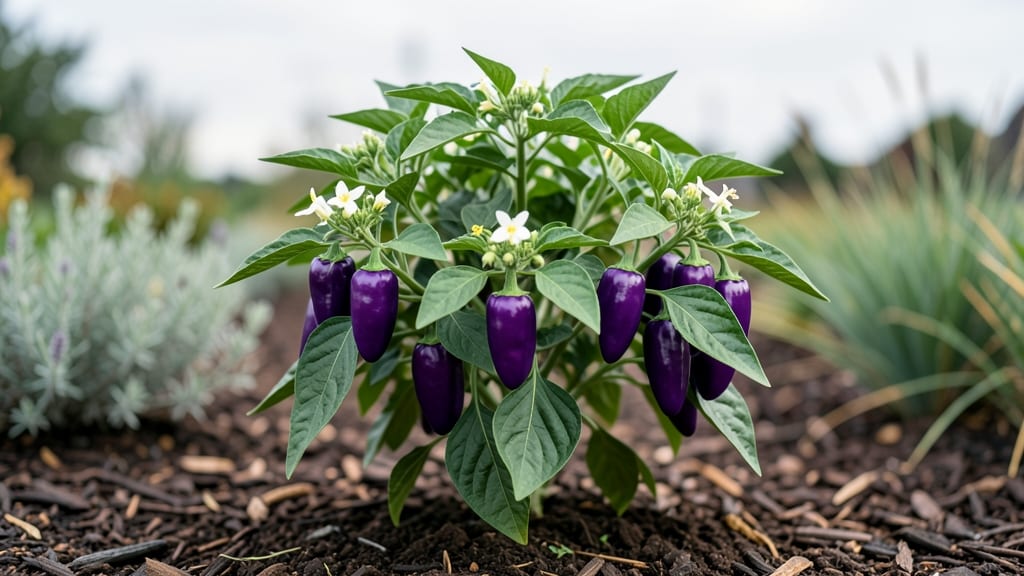
Growing Purple Beauty sweet peppers transforms your garden into a purple-hued treasure chest. 🌿 These compact plants pack serious flavor and production into small spaces, and I’ve learned the pole-training trick that turns my 2-foot-tall plants into 5-foot yield machines—without taking over my yard.
The secret isn’t fancy; it’s about smart support, consistent care, and knowing when to let them climb.
Start with well-draining soil rich in compost, then give them a sturdy trellis or tomato cage early—before they get too heavy. Purple Beauty thrives in full sun (6+ hours daily) and warm soil (70°F+), so wait until after your last frost to plant.
Water at the base, not the leaves, and feed with balanced fertilizer every 4-6 weeks to keep those sweet, purple fruits coming. The first harvest arrives in about 70-80 days, and with proper training, you’ll get continuous production until frost.
What you’ll end up with is a bush that stays tidy (no sprawling vines) while producing 100+ peppers per plant—each one sweet, glossy, and perfect for snacking or cooking. The purple hue fades to red when ripe, but the flavor stays consistently sweet, even when left on the vine.
Plus, the vertical growth saves space, making it ideal for balconies, small gardens, or even container growing.
Troubleshoot common issues like blossom-end rot by keeping soil moisture even and adding calcium, and deter pests with row covers or neem oil. The biggest mistake? Waiting too long to train the plants—start guiding them upward within the first few weeks.
With these steps, you’ll have a purple pepper harvest that’s the talk of your neighborhood (and your taste buds).
📚 In This Guide
- What you need
- Instructions
- Tips and common mistakes
- Wrapping up and next steps
What you need
- ● Purple Beauty sweet pepper seeds or seedlings: 3–5 plants (or 10–15 seeds if starting from scratch). Choose organic, non-GMO seeds for best results.
- ● Growing containers or garden bed: Containers: 5-gallon pots (minimum) or larger (7+ gallons preferred) with drainage holes.
- ● Garden bed: Well-draining soil in a sunny spot (6+ hours of sunlight daily). Raised beds are ideal for compact training.
- ○ Pole or trellis system: Bamboo stakes (5–6 ft tall), tomato cages (modified for height), or a sturdy A-frame trellis. Optional: Twine or soft plant ties for securing vines.
- ● High-quality potting mix: 1 part compost, 1 part coconut coir or peat moss, and 1 part perlite/sand for aeration. Or store-bought organic mix amended with compost.
- ● Fertilizer: Balanced fertilizer (10-10-10) or compost tea: 1 tbsp per plant at planting.
- ● Low-nitrogen, high-phosphorus fertilizer (5-10-10): For flowering/fruiting (apply every 3–4 weeks).
- ● Pruning shears or sharp scissors: For trimming excess foliage or suckers.
- ● Gloves: Heavy-duty gardening gloves to protect hands from thorns (if using trellises).
- ● Watering can or drip irrigation: Peppers need 1–1.5 inches of water per week; avoid wetting leaves to prevent disease.
- ● Mulch (straw or shredded leaves): 2–3 inches thick to retain moisture and suppress weeds.
- ● pH testing kit: Ideal soil pH for peppers: 6.0–6.8. Adjust with lime (to raise pH) or sulfur (to lower) if needed.
- ○ Shade cloth (optional): 30–50% shade for hot climates to prevent stress during peak summer.
- ○ Row cover (optional): For early-season protection from pests or late frosts.
- ● 🌡️ Warmth is key: Purple Beauty peppers thrive in temperatures 70–85°F. Use a heat mat if starting seeds indoors.
- ● ✨ Support early: Begin training vines onto poles 3–4 weeks after transplanting to encourage upward growth.
- ● 🎯 Pollination help: Gently shake plants or use a small brush to transfer pollen if indoor/container-grown.
How to train purple Beauty sweet peppers for compact pole growth
Here's the method I use to grow these stunning peppers vertically—saving space while boosting yields.
🪴 Step 1: Choose the Right Support System
Start with a sturdy 5-foot tall trellis or tomato cage for each plant. I like the A-frame design because it naturally guides vines upward without tangling. Secure it firmly in the ground with 2-3 stakes or bury the base of the cage 6 inches deep for stability. Purple Beauty peppers are compact but still need support—skipping this step leads to sprawling plants that break under fruit weight.
Position your support 2-3 feet from the plant's base so vines can easily reach the structure. If using a trellis, face it toward the sun to prevent shading. The goal is to create a vertical growing zone that keeps foliage off the ground, reducing disease risk and improving airflow.
🌱 Step 2: Plant and Prune for Vertical Growth
Set your Purple Beauty pepper 18-24 inches apart in well-draining soil amended with 2 inches of compost. Plant slightly deeper than the root ball to encourage stronger root development. The first 3-4 inches of stem should be buried—this prevents stem rot while promoting stability.
When the plant reaches 12 inches tall, begin pruning side shoots that grow in the crotch between the main stem and branches. Use clean, sharp pruners to snip these shoots just above the leaf node. This redirecting energy upward produces stronger central stems and more peppers. I prune every 7-10 days during active growth—don't go overboard, or you'll stunt production.
☀️ Step 3: Train Vines Along the Support
As the main stem grows, gently tie it to the trellis with soft plant ties or old fabric strips. I do this every 4-6 inches of vertical growth to prevent snapping. Avoid wire or plastic ties—they can cut into tender stems as the plant thickens. The key is gentle guidance, not forcing the vine into position.
When lateral branches form, select 2-3 of the strongest and tie them horizontally to the trellis. These branches will bear most of your peppers, so choose ones with healthy leaves and strong stems. Remove any that grow downward—they'll weigh the plant down. You'll see compact clusters of fruit forming along these trained branches, making harvesting easier.
💧 Step 4: Maintain Water and Fertility for Pole Growth
Water at the base of the plant every 2-3 days during flowering and fruiting, keeping the top 2 inches of soil consistently moist. Purple Beauty peppers hate soggy roots but also need steady moisture to develop sweet, plump fruit. I water in the early morning to reduce evaporation and fungal risks. Let the soil dry slightly between waterings—wilting leaves signal it's time to hydrate.
Feed with a balanced 10-10-10 fertilizer every 4 weeks once flowers appear. I mix 1 tablespoon per gallon of water and apply it directly to the soil. The goal is to support fruit development without excessive leaf growth. Too much nitrogen leads to lush foliage but fewer peppers—watch for dark green leaves as a sign you're overdoing it.
✂️ Step 5: Prune and Harvest for Continuous Production
Once peppers reach 3-4 inches long, harvest them promptly to encourage more fruit. Use clean pruners to cut the stem just above the pepper, leaving a small nub. This prevents disease entry points and speeds regrowth. Purple Beauty peppers ripen from the top down, so I check daily during peak season—unharvested peppers slow new fruit production.
After each harvest, prune any yellowing leaves or branches with fewer than 3 peppers. This improves airflow and directs energy to new growth. I also trim the top of the main stem when it reaches the trellis's peak—this signals the plant to focus on ripening existing fruit rather than growing taller. With proper training, you'll get 3-4 harvest cycles per season from each plant.
Tips & tricks for perfect purple Beauty sweet pepper pole training
These simple tricks will help you maximize your garden space while growing healthier, more productive Purple Beauty peppers.
Support System Stability: When installing your 5-foot trellis or tomato cage, drive the stakes at least 6 inches deep into the soil—this prevents wobbling when vines reach full height. I've seen plants topple when supports aren't anchored properly, especially during wind or when heavy fruit develops. For extra security, tie the trellis to a nearby post with soft twine if you're in a windy area.
Pruning Precision: In Step 2, when pruning side shoots from the main stem, focus on removing only those growing in the crotch between branches. Leave smaller side shoots that form along the main stem—these can actually produce additional peppers. I learned this the hard way by over-pruning and ended up with fewer fruits than expected. Remember, you're shaping the plant's energy flow, not stripping it completely.
Tying Technique: When training vines in Step 3, use soft plant ties or even old fabric strips instead of wire or plastic. These materials stretch as the stem thickens, preventing damage that can occur with rigid ties. I tie every 4-6 inches of growth, but make sure each tie is loose enough to allow the stem to thicken naturally. Too-tight ties can actually strangle the plant as it grows.
Harvest Timing: Purple Beauty peppers ripen from the top down, so always harvest the largest, most mature peppers first. This encourages the plant to focus energy on ripening the remaining fruit. I check my plants daily during peak season—unharvested peppers can slow new fruit production by up to 30%. Use clean pruners and cut just above the pepper to prevent disease entry points.
Pro Tips for Purple Beauty Sweet Pepper
- These simple tricks will help you maximize your garden space while growing healthier, more productive Purple Beauty peppers.
- Support System Stability: When installing your 5-foot trellis or tomato cage, drive the stakes at least 6 inches deep into the soil—this prevents wobbling when vines reach full height.
- Pruning Precision: In Step 2, when pruning side shoots from the main stem, focus on removing only those growing in the crotch between branches.
Frequently asked questions
Got questions about growing Purple Beauty sweet peppers? You’re not alone! Here are answers to the most common queries to help you cultivate a thriving, compact pole-trained harvest.
How do I know when Purple Beauty peppers are ready to pick?
Purple Beauty peppers turn from deep purple to a vibrant red when fully ripe—this is your cue! Pick them when they’re firm, glossy, and about 3–4 inches long. For sweeter flavor, wait until they’re fully red. Use sharp pruners or scissors to avoid damaging the plant.
Can I grow Purple Beauty peppers in containers or small spaces?
These compact plants thrive in containers as small as 5-gallon pots or vertical gardens. Just ensure they get 6–8 hours of sunlight and stake or trellis them for support. Pole training maximizes space—ideal for balconies or patios!
Why are my Purple Beauty peppers cracking or turning yellow?
Cracking often happens with rapid growth + inconsistent watering. Keep soil evenly moist (not soggy) and mulch to retain moisture. Yellowing? Check for overwatering or nutrient deficiency. Test soil pH (aim for 6.0–6.8) and fertilize lightly with a balanced 10-10-10 mix if needed.
How should I store harvested Purple Beauty peppers?
Store unripe peppers in the fridge for 1–2 weeks (they’ll ripen slightly). For longer shelf life, ferment or pickle them! Ripe red peppers last 5–7 days at room temp or 2 weeks refrigerated. Freeze extras by blanching first to preserve texture.
What’s a good alternative if Purple Beauty peppers don’t thrive in my climate?
Try ‘Purple Flash’ (similar compact habit) or ‘Carmen’ (heat-tolerant, purple-to-red). For milder climates, ‘Jupiter’ (yellow) or ‘Sweet Banana’ are great alternatives. All love full sun and well-draining soil!
Wrapping up and next steps
Growing purple beauty sweet peppers with compact pole training is a rewarding way to maximize your garden’s potential—whether you’re a space-saving urban gardener or a backyard enthusiast! 🌱 With the right setup, you’ll enjoy abundant harvests, vibrant flavors, and a stunning addition to your kitchen or market.
Now that you’re equipped with the knowledge, it’s time to roll up your sleeves and get planting—your future harvests are waiting!
Ready to start? Pick your spot, gather your supplies, and begin training those poles today! 🌿 For extra inspiration, check out our guide on companion planting to boost your peppers’ growth even further.