
Plants
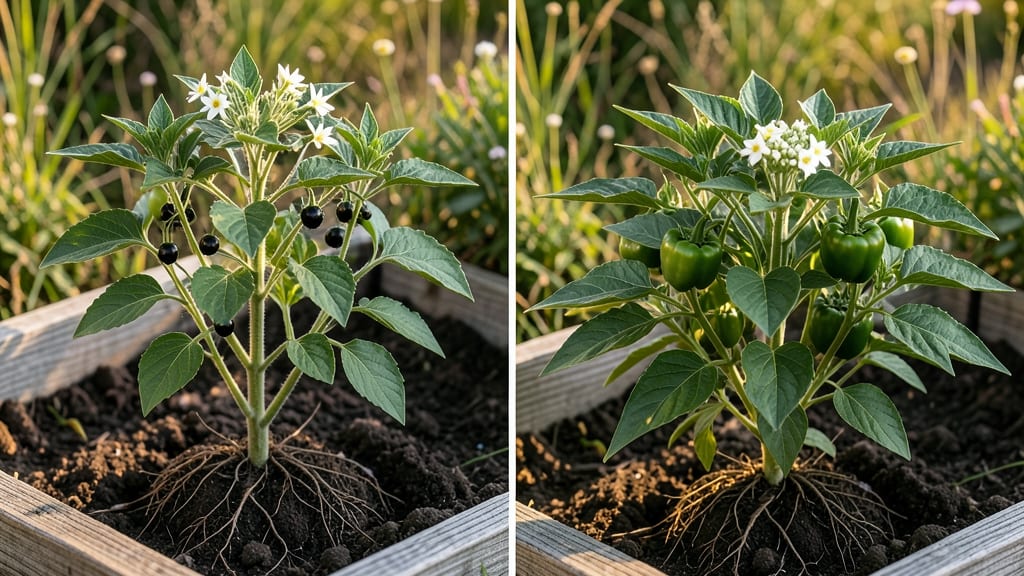
Weeds that look like pepper plants have ruined more harvests than I can count. 🌱 The moment I spotted those familiar leaves in my garden last summer, I knew I had to act fast—before they crowded out my actual peppers.
The confusion between nightshade, wild tomatoes, and pepper seedlings is real, but there are key differences that save your crop.
Most imposters share the same leaf shape but give away their identity through tiny details: nightshade has hairy stems and bitter-tasting leaves, while wild tomatoes produce tiny green fruit before your peppers even set buds.
The key is checking the stems—pepper plants grow upright with smooth stems, while weeds sprawl or develop prickly hairs. A quick pinch test reveals the difference: pepper leaves are smooth and slightly waxy, while weeds feel rough or fuzzy.
Once you spot them, act fast—pull weeds by hand when soil is moist, or use a hoe for larger patches. For stubborn nightshade, a targeted vinegar spray (3% acetic acid) works in minutes without harming your peppers.
The best defense? Mulch heavily around your plants to block weed seeds from sprouting in the first place. I’ve kept my pepper patch weed-free for two full seasons using this method.
Confusion usually happens when seedlings pop up at the same time. Here’s the rule I follow: if the plant has a strong pepper scent when crushed or produces white flowers, it’s safe.
Everything else? Out it goes. Prevention starts with clean garden beds—remove weeds before they go to seed, and you’ll save yourself hours of weeding later.
How Nature Plays Hide-and-Seek
If you’ve ever mistook a pesky weed for a pepper plant, you’re not alone—nature has a knack for creating lookalikes that can throw even the greenest thumbs for a loop. But why does this happen?
The answer lies in a mix of evolutionary survival strategies, botanical mimicry, and even human gardening habits. Let’s break down the science behind these deceptive doppelgängers.
Weeds that resemble peppers aren’t just coincidental—they’re the result of millions of years of evolutionary pressure. Plants like Solanum nigrum (black nightshade) or Physalis (ground cherries) have developed similar leaf shapes, growth patterns, and even flower structures because:
- 🎯 Pollinator Confusion: Some weeds mimic pepper plants to attract the same bees, birds, or butterflies. If a pollinator is drawn to a flower that looks like a pepper’s, the weed gets a free ride in spreading its seeds—even if it’s not edible or useful to humans.
- 🌿 Habitat Overlap: Many weeds thrive in the same conditions as peppers—warm soil, full sun, and well-draining beds. Their similar growth habits mean they’ll pop up in the same spots, making them nearly indistinguishable until they flower or fruit.
- 🔄 Genetic Similarity: Pepper plants (Capsicum species) and their weed lookalikes often belong to the same family (Solanaceae), which means they share DNA traits like leaf serration, hairy stems, or even toxic compounds (like solanine in nightshade). This makes them hardwired to look alike.
Pro Tip: 🔥 Pay attention to the flowers and fruit—pepper plants have white or purple flowers and green, yellow, or red peppers, while weeds often produce tiny black berries or star-shaped flowers.
While nature sets the stage, gardening practices often give weeds the perfect opportunity to sneak in. Here’s how:
- 🌱 Contaminated Seeds or Soil: Many gardeners unknowingly introduce weed seeds through low-quality soil mixes, compost, or even store-bought pepper seeds that are mixed with weed contaminants. A single contaminated bag can spread dozens of lookalike plants.
- 💧 Overwatering or Poor Drainage: Weeds like Datura (jimsonweed) thrive in soggy soil—just like peppers do. If your garden retains too much moisture, these weeds will outcompete your peppers for nutrients and space.
- 🌿 Neglected Garden Beds: Pepper plants are slow starters compared to weeds. If you don’t mulch, thin seedlings, or remove volunteers (wild peppers or weeds that self-seed), weeds will fill the gaps before your peppers get a chance to establish themselves.
Pro Tip: 🌡️ Test your soil’s pH and drainage—peppers prefer 6.0–6.8 pH and well-draining soil. Weeds often tolerate poorer conditions, so amending your soil can starve them out before they take over.
Some weeds have biological advantages that make them nearly identical to peppers until they’re too late to remove. For example:
| Weed | Why It Looks Like Pepper | Key Difference |
|---|---|---|
| Solanum nigrum (Black Nightshade) | Similar serrated leaves and square stems (like peppers). | Produces tiny black berries (peppers have no fruit until harvest). |
| Physalis (Ground Cherry) | Yellow flowers resemble pepper blossoms; leaves are similar in shape. | Fruit is paper lantern-like (peppers are smooth and bell-shaped). |
| Datura stramonium (Jimsonweed) | Large, lobed leaves that can mimic young pepper foliage. | Flowers are trumpet-shaped and white/purple (pepper flowers are smaller and star-shaped). |
Pro Tip: ✨ Use a magnifying glass to check for leaf veins, stem texture, or hairiness—pepper leaves are usually smooth and glossy, while weeds often have fuzzy or rough surfaces.
Understanding these causes is the first step to spotting and stopping these sneaky impostors before they ruin your harvest. Next, we’ll dive into how to tell them apart—so you’ll never pick a weed by mistake again!
Quick Fixes for False Pepper Lookalikes
Now that you know what’s really growing in your garden, it’s time to take action! Whether you’re dealing with sneaky weeds masquerading as peppers or just want to keep your plants thriving, these practical, step-by-step solutions will help you reclaim your garden—fast.
Before anything else, remove the offenders to stop them from spreading seeds or stealing nutrients.
- For small weeds (like purslane or lambsquarters):
- 👨🍳 Grab and yank them by hand when the soil is moist (after rain or watering).
- 🔪 Use a trowel for stubborn roots—dig deep to avoid regrowth.
- ⏰ Do it early in the morning or evening when weeds are less brittle.
- For larger weeds (like pigweed or amaranth):
- 🌱 Cut them at the base with pruners or shears if pulling isn’t an option.
- 🗑️ Bag and dispose of them immediately—don’t compost unless you’ve confirmed they’re not invasive.
> 💡 Pro Tip: If weeds keep coming back, they might be perennial (like bindweed). In that case, dig deeper or use a weed torch (safely!) for stubborn patches.
Weeds thrive where peppers struggle. Give your real peppers the upper hand with these quick fixes:
| Problem | Solution | How to Do It |
|---|---|---|
| Poor soil nutrition | Add compost or fertilizer rich in nitrogen and phosphorus. | Mix 1 inch of compost into the top 6 inches of soil around pepper plants. |
| Shady competition | Thin out weeds to let sunlight reach peppers. | Remove weeds within 12 inches of pepper stems. |
| Dry soil | Weeds steal water—keep peppers hydrated. | Water deeply 1-2 times per week (early morning is best). |
| Pests attracted by weeds | Use row covers or neem oil to deter bugs. | Spray neem oil on peppers (and nearby weeds) to repel pests naturally. |
> 🌡️ Pro Tip: Mulch heavily (2-3 inches of straw or grass clippings) to block weed seeds from germinating and retain moisture.
An ounce of prevention beats a pound of pulling! Stop weeds before they start with these long-term strategies:
- 🌿 Plant densely: Use close spacing (18-24 inches apart) so peppers shade out weeds.
- 🌱 Choose competitive companions: Plant basil, marigolds, or onions near peppers—they deter weeds naturally.
- 🔄 Rotate crops: Avoid planting peppers (or nightshades) in the same spot yearly—weeds and diseases build up.
- 💧 Water wisely: Deep, infrequent watering encourages strong pepper roots that outcompete weeds.
- 🧹 Use landscape fabric (sparingly): Lay biodegradable fabric under mulch in high-weed areas (but don’t smother soil permanently).
> ✨ Pro Tip: Solarize your soil in late summer—cover bare soil with clear plastic for 4-6 weeks to kill weed seeds before planting.
If weeds keep winning, don’t fight alone:
- 🌿 Vinegar spray (for non-organic gardens): Mix 1 gallon vinegar + 1 oz dish soap and spray on weeds (avoid peppers!).
- 🔥 Flame weeding: A propane torch (like the Weed Dragon) zaps weeds in seconds—great for driveways or large areas.
- 💊 Pre-emergent herbicides (last resort): Use corn gluten meal (organic) or pre-emergent granules before planting to block weed seeds.
Final Thought: The key is consistency—weeds don’t give up easily, but neither should you! Check your garden weekly, and soon, your peppers will be the only green things stealing the show. 🌶️💪
Frequently asked questions
How can I tell if a young plant is a weed or a pepper seedling?
Check the stem texture and leaf shape—pepper seedlings have smooth, glossy leaves with slightly serrated edges, while weeds like nightshade often have rough or hairy stems and darker green leaves. Crush a leaf: peppers smell faintly spicy, while weeds may have no scent or a bitter aroma.
What’s the fastest way to remove weeds without harming pepper plants?
Use a hand trowel to dig weeds out by the roots when soil is moist, or spot-treat with a vinegar spray (1 gallon vinegar + 1 oz dish soap)—just avoid spraying peppers. For stubborn weeds, try a flame weeder (like a propane torch) in dry conditions.
Are all weeds that look like peppers toxic?
Some are! Nightshade (Solanum nigrum) contains solanine and is toxic if ingested, while ground cherries (Physalis) are edible but not the same as peppers. Always check for tiny black berries (nightshade) or paper lantern fruit (ground cherries) before pulling.
Why do weeds keep coming back after I remove them?
Weeds spread through seeds or underground roots. If you don’t remove the entire root system, they regrow. For persistent weeds, try mulching with straw (2-3 inches) or applying corn gluten meal (a natural pre-emergent) to block new seeds.
Can I use the same fertilizer for peppers and weeds?
No—weeds thrive on low-quality soil, while peppers need balanced fertilizer (10-10-10 or 5-10-10). Over-fertilizing weeds can make them grow faster. Instead, feed peppers with compost or organic matter to strengthen their roots and outcompete weeds.