
Planting
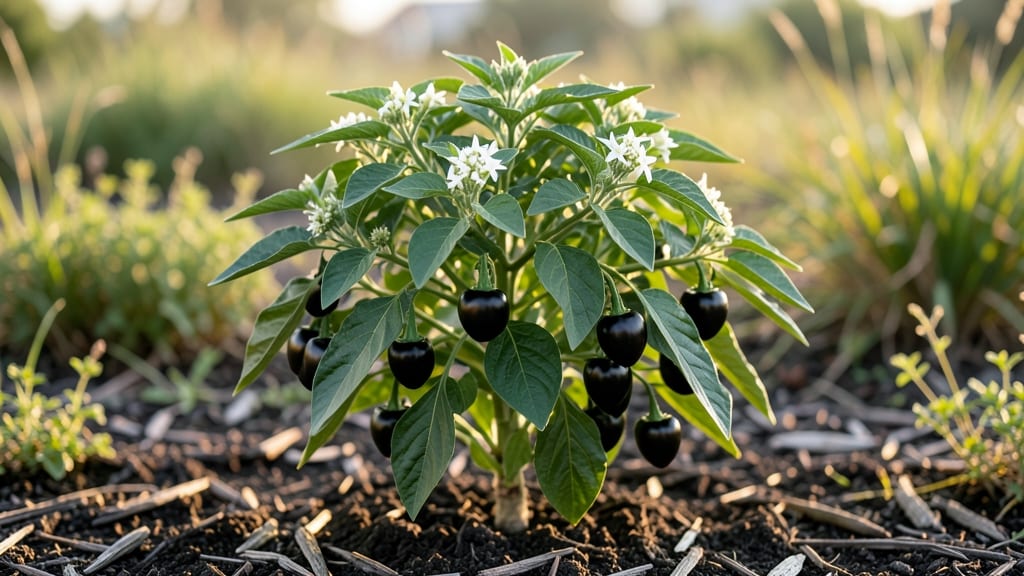
Black peppercorn plants are climbing vines with glossy, heart-shaped leaves that look like something out of a jungle—if your jungle had a kitchen. 🌿 The leaves are deep green, about 3-5 inches long, and grow in pairs along wiry, twining stems that latch onto trellises or other supports with tiny rootlets.
If you’ve ever seen a pepper plant in a grocery store, this is what it looks like before the magic happens. The real show starts with the flowers: small, greenish-white blooms that appear in clusters.
They’re nothing special on their own, but they’re the precursors to those familiar black (or green) peppercorns. The plant itself can grow 10-20 feet tall if given enough support, though most home gardeners keep it trimmed to 6-10 feet for easier harvesting.
Confusion often comes from its resemblance to Virginia creeper—but pepper plants have smooth-edged leaves (no jagged lobes) and a more delicate, vine-like growth habit. By mid-summer, you’ll spot tiny green berries forming in place of the flowers.
These start out green, then turn red before drying into the peppercorns we know. The berries grow in tight clusters along the stems, and their round, pea-sized shape is a dead giveaway.
Unlike similar vines, black pepper has a fragrant, slightly spicy aroma when leaves or stems are crushed—another clue to its identity. If you’re growing it outdoors, the plant thrives in humid, tropical climates (zones 10-12) but can also be grown indoors as a houseplant with proper care.
The key to spotting it correctly? Look for the twining habit, glossy leaves, and those signature peppercorns—no other common vine has all three. Once you know what to watch for, it’s impossible to miss!
Understanding Peppercorn Plant Growth
Black peppercorn plants—scientifically known as Piper nigrum—are tropical vines that thrive in warm, humid environments. Their distinctive appearance, from glossy leaves to fragrant flowers, isn’t just a matter of aesthetics; it’s a result of specific biological and environmental factors.
If your peppercorn plant isn’t looking the way you expected, the issue often stems from one (or more) of these core causes. Let’s break down why your plant might be growing differently than the lush, vine-covered ideal.
Not all black peppercorn plants look identical—just like how apple trees can produce different fruit shapes, pepper plants vary based on their genetic lineage and cultivar. Some varieties, like the Piper nigrum "Mocha" or "Kottanadan," may have:
- Darker, thicker leaves with a waxier coating to retain moisture in drier climates.
- Slower vine growth if bred for higher pepper yield rather than rapid climbing.
- Smaller or larger berries depending on whether they’re grown for black, green, or white peppercorns.
Why it happens: Pepper plants are hemi-epiphytes, meaning they rely on trees or supports to climb, but their natural growth rate and leaf structure can differ based on their origin. If you’re growing a heirloom or wild-type plant, expect more variability in vine thickness, leaf shape, or berry clusters compared to commercial hybrids.
Actionable tip: If you’re unsure about your plant’s variety, check the seed packet or ask the nursery. Some tropical plant suppliers sell "black pepper" plants that are actually Piper arborescens (long pepper) or other Piper species, which have thinner vines and smaller leaves.
Black peppercorn plants are tropical natives, meaning they’re highly sensitive to temperature swings. If your plant looks leggy, has yellowing leaves, or produces sparse berries, it’s likely reacting to:
- Cold drafts or temperatures below 60°F (15°C): Pepper plants cannot tolerate frost and may drop leaves or stop flowering if chilled.
- Sudden heat spikes above 95°F (35°C): While they love warmth, extreme heat can cause leaf curling or sunburn (visible as brown patches).
- Low humidity (below 70%): Native to rainforests, these plants wilts quickly in dry air, leading to crispy leaf edges or stunted growth.
Why it happens: Pepper plants use a process called transpiration to regulate temperature, but when humidity drops, their stomata (pores on leaves) close to conserve water—this slows growth and turns leaves dull. Additionally, ethylene gas (released by stressed plants) can trigger premature leaf drop or flower abortion.
Actionable tip:
- Use a humidifier or place a tray of water near the plant.
- Mist leaves daily in dry climates (avoid soaking the soil).
- Grow indoors near a south-facing window or under grow lights to mimic tropical sunlight.
Black peppercorn plants are shade-tolerant but light-dependent. If your vine looks weak, has pale leaves, or produces few berries, it’s likely due to:
- Insufficient indirect light: While they can grow under 50% shade, they need at least 4–6 hours of bright, diffused light daily for optimal growth.
- Direct sunlight exposure: Harsh midday sun (especially in dry climates) can bleach leaves or cause chlorosis (yellowing between veins).
- Artificial light deficiencies: LED or fluorescent bulbs lack the full spectrum needed for pepper plant flowering and berry development.
Why it happens: Pepper plants rely on chlorophyll in their leaves to convert light into energy via photosynthesis. Without enough light, they prioritize leaf growth over vine expansion, leading to thin, sparse vines. Additionally, photoperiod sensitivity means they need consistent light cycles (12+ hours) to trigger flowering.
Actionable tip:
- Place your plant near an east or west window (avoid harsh southern exposure).
- Rotate the pot quarter-turn weekly to prevent lopsided growth.
- Supplement with a full-spectrum grow light (12–16 hours/day) if indoors.
A peppercorn plant’s appearance—from leaf color to vine strength—is directly tied to its soil health. Common soil-related issues include:
- Poor drainage: Pepper plants hate soggy roots and may develop yellow leaves or root rot if waterlogged.
- Nutrient deficiencies:
- Nitrogen (N) deficiency → Pale, yellowing leaves (starts with older leaves).
- Potassium (K) deficiency → Weak stems, poor berry development.
- Magnesium (Mg) deficiency → Interveinal chlorosis (yellow patches between veins).
- High pH (above 6.5): Locks out essential nutrients like iron and manganese, causing stunted growth.
Why it happens: Pepper plants thrive in well-aerated, slightly acidic soil (pH 5.5–6.5). If the soil is too dense, nutrients can’t reach the roots efficiently, leading to chlorosis (nutrient starvation). Over-fertilizing with synthetic mixes can also burn roots or disrupt the mycorrhizal fungi that help pepper plants absorb water.
Actionable tip:
- Use a peat-based or coconut coir mix with perlite for drainage.
- Test soil pH with a digital meter and amend with sulfur (to lower pH) or lime (to raise it).
- Fertilize with a balanced organic fertilizer (e.g., 5-5-5) every 4–6 weeks during growing season.
By addressing these root causes—whether genetic, environmental, or soil-related—you’ll help your black peppercorn plant grow closer to its natural, vibrant form. The key is observation and adjustment: notice where your plant struggles (leaves, vines, berries) and target the fix accordingly!
Reviving Your Pepper Vine
If your black peppercorn plant isn’t thriving, don’t panic—most issues have simple fixes! Below are targeted solutions for common problems, paired with prevention tips to keep your plant lush and productive.
Cause: Poor soil, lack of nutrients, or insufficient sunlight. Solution:
- 🔥 Boost nutrients: Use a balanced, organic fertilizer (like compost or 10-10-10) every 4-6 weeks during growing season.
- 🍳 Upgrade soil: Pepper plants love well-draining, slightly acidic soil (pH 6.0–7.0). Mix in coconut coir or perlite if your soil is too dense.
- 👨🍳 Increase sunlight: Place your plant in partial shade to full sun (6+ hours daily). If indoors, use a grow light 12–14 hours/day.
💡 Prevention Tip: Mulch with organic matter (like wood chips) to retain moisture and slowly release nutrients.
Cause: Overwatering, underwatering, or fungal infections (like powdery mildew). Solution:
- 🌡️ Check moisture: Stick your finger 1–2 inches into the soil. Water only when the top layer feels dry.
- ✨ Treat fungal issues: Spray leaves with neem oil or a baking soda mix (1 tsp baking soda + 1 quart water + a drop of dish soap) weekly until symptoms fade.
- 🎯 Improve airflow: Prune overcrowded vines and avoid placing plants too close together.
💡 Prevention Tip: Water at the base (not leaves) in the morning to reduce humidity-related diseases.
Cause: Weak plants attract pests; dry conditions worsen infestations. Solution:
- 🔪 Manual removal: Wipe off pests with a damp cloth or spray with soapy water (1 tsp mild soap per quart of water).
- 🥘 Natural repellents: Introduce ladybugs or spray with garlic/pepper spray (blend 2 garlic cloves + 1 tbsp cayenne + 1 quart water).
- 🌿 Strengthen defenses: Feed with compost tea to boost plant immunity.
💡 Prevention Tip: Inspect new plants before bringing them indoors and quarantine them for a week.
Cause: Low humidity, fluoride buildup (from tap water), or root stress. Solution:
- 💧 Use filtered/rainwater: Fluoride in tap water can scorch leaves. Collect rainwater or use a filter.
- 🌡️ Increase humidity: Place a tray of water near the plant or use a humidifier (ideal: 60–70% humidity).
- 🌱 Trim damaged leaves: Snip off brown edges with clean scissors to redirect energy to healthy growth.
💡 Prevention Tip: Mist leaves lightly in the morning (avoid evening misting to prevent fungal growth).
Cause: Young plants, improper pruning, or lack of pollinators. Solution: - ⏰ Prune strategically: Pinch back new growth to encourage bushier plants.
Remove suckers (shoots between stem and branches) to focus energy on fruit. - 🐝 Hand-pollinate: Gently shake the plant or use a small brush to transfer pollen between flowers. - 🌡️ Maintain warmth: Pepper plants need consistent temperatures above 70°F (21°C). Use row covers in cool climates.
💡 Prevention Tip: Plant basil or marigolds nearby—they attract pollinators and deter pests!
Final Note: Black pepper plants are resilient! With the right care, they’ll reward you with glossy leaves, fragrant flowers, and eventually, spicy peppercorns. 🌿✨
Frequently asked questions
How can I tell if my plant is actually black pepper (Piper nigrum) and not another vine?
Look for these key identifiers: glossy, heart-shaped leaves (3-5 inches long) growing in pairs along wiry stems, and tiny rootlets that cling to supports. Unlike Virginia creeper, pepper vines have smooth leaf edges and a fragrant, slightly spicy aroma when crushed. The flowers are small greenish-white clusters, and the berries start green, turn red, then blacken into peppercorns.
Why does my peppercorn plant have leaves that look different from what I expected?
Varieties like "Mocha" or "Kottanadan" may have thicker, darker leaves or slower growth. Environmental factors also play a role: low light causes pale leaves, dry air makes them crispy, and nutrient deficiencies (like nitrogen) turn them yellow. Check your plant's growing conditions—pepper vines need humidity, warmth, and indirect light to maintain their signature glossy appearance.
Can I grow a black peppercorn plant indoors, and what should it look like?
Yes! Indoors, expect a 6-10 foot vine with heart-shaped, deep green leaves (3-5 inches) growing in pairs. Provide bright, indirect light (east/west window) and 60-70% humidity—without these, leaves may yellow or droop. Flowers appear as small greenish-white clusters, followed by pea-sized berries that turn red then black. Use a trellis to mimic outdoor climbing support.
What do the flowers and berries look like on a black peppercorn plant?
Flowers are tiny, greenish-white and appear in clusters along the vine. They’re nothing special alone, but they’re the key to spotting your plant! After flowering, round, pea-sized green berries form in tight clusters. These turn red when ripe, then darken to black (or stay green if harvested early). The berries are the plant’s most distinctive feature—no other common vine produces these signature peppercorns.
How big should my black peppercorn plant get, and when will it produce peppercorns?
Outdoors, pepper vines can reach 10-20 feet with proper support, while indoor plants typically stay 6-10 feet. With ideal conditions (warmth, humidity, and indirect light), young plants may flower in 2-3 years, producing peppercorns by their third year. Harvest when berries are firm and green (for green peppercorns) or let them turn red/black for traditional black pepper.