
Companion Plants
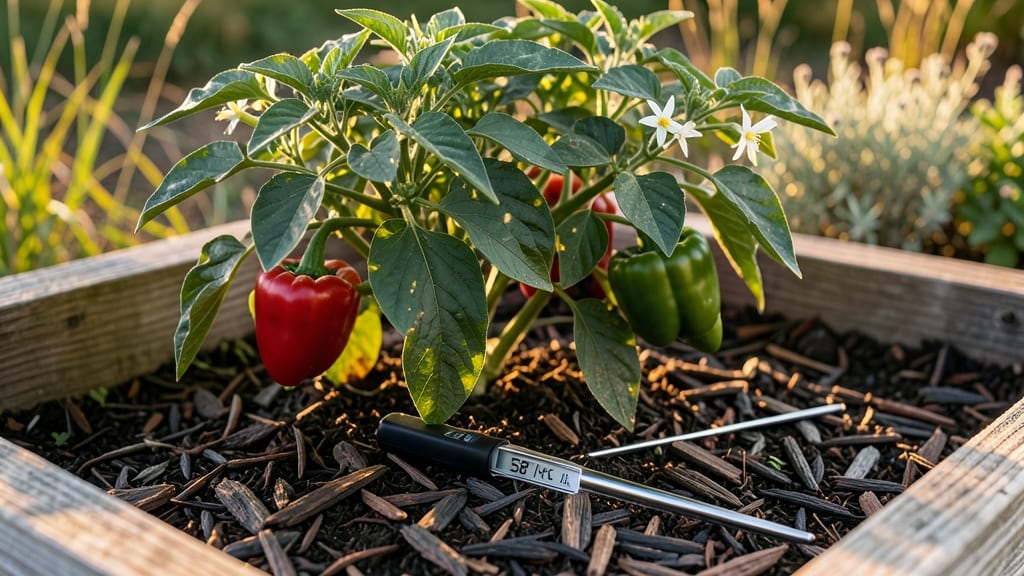
Understanding these temperature thresholds helps you protect your peppers from cold stress. 🌱 The ideal range for active growth is 70-85°F (21-29°C) during the day, with nighttime temps staying above 60°F (15°C). Below these levels, metabolic processes slow, leading to weak stems and poor flowering.
In colder climates, I recommend using row covers or moving potted plants indoors before temperatures drop below 55°F (13°C) at night.
Cold damage often appears as blackened leaves or wilting, but the real issue happens at the cellular level. When temperatures fall too low, cell membranes rupture, and water uptake becomes impossible.
This explains why peppers—native to tropical regions—struggle even with mild chills. If you notice early signs of cold stress, act fast by providing warmth and humidity to help recovery.
💡 In This Article
- Critical Temperature Thresholds for Pepper Plant Survival
- Protecting Pepper Plants from Cold Weather: Practical Solutions
Critical temperature thresholds for pepper plant survival
Pepper plants originate from tropical regions, so their cellular machinery is finely tuned to thrive in warmth. The 55°F (13°C) threshold marks the lower limit for active growth, where enzymes like RuBisCO (critical for photosynthesis) begin to slow down.
Below 50°F (10°C), chlorophyll production drops by 30-40%, causing leaves to yellow and stems to weaken. This is why you'll notice new growth stalling and existing leaves losing their vibrant green hue during cooler spells.
The real danger zone starts at 40°F (4°C) or lower, where cell membranes begin to rupture due to ice crystal formation. At these temperatures, water uptake through roots becomes impossible, and the plant's vascular system shuts down—similar to how a frozen pipe bursts under pressure.
Even brief exposure to 32°F (0°C) can kill pepper plants within hours, as frost triggers irreversible damage to cellular structures. 🌡️ Humidity plays a critical role here: dry air accelerates moisture loss, making plants more vulnerable to cold stress.
Nighttime temperatures are particularly crucial for fruit production. When nights dip below 60°F (15°C), the plant's metabolic rate decreases, delaying flowering and fruit set. This is why peppers grown in cooler climates often produce fewer peppers or take longer to mature.
The ideal nighttime range is 65-70°F (18-21°C), which maintains optimal enzyme activity for fruit development. In contrast, daytime highs should stay between 75-85°F (24-29°C) to maximize photosynthesis.
Cold stress also triggers defensive responses that divert energy away from fruit production. For example, peppers may produce more antioxidants to protect against cellular damage, which competes with resources needed for pepper development.
This explains why chili peppers—already more sensitive than bell peppers—often struggle in cooler conditions. Even a single night below 60°F (15°C) can reduce pepper yield by 20-30% over the growing season.
Consider this comparison: a bell pepper plant in 75°F (24°C) daytime and 65°F (18°C) nighttime will produce fruit 40% faster than one experiencing 65°F (18°C) days and 55°F (13°C) nights.
The difference lies in how quickly the plant can convert sunlight into energy for growth. In cooler conditions, this process becomes inefficient, leading to smaller, fewer peppers.
To visualize the impact, imagine a pepper plant's leaves as tiny solar panels. At 55°F (13°C), these panels operate at 60% capacity, while at 75°F (24°C), they hit 90% efficiency.
This efficiency drop directly translates to slower growth and reduced pepper production. Understanding these thresholds helps you create the ideal growing environment, whether through greenhouse management or seasonal planning.