
Picking
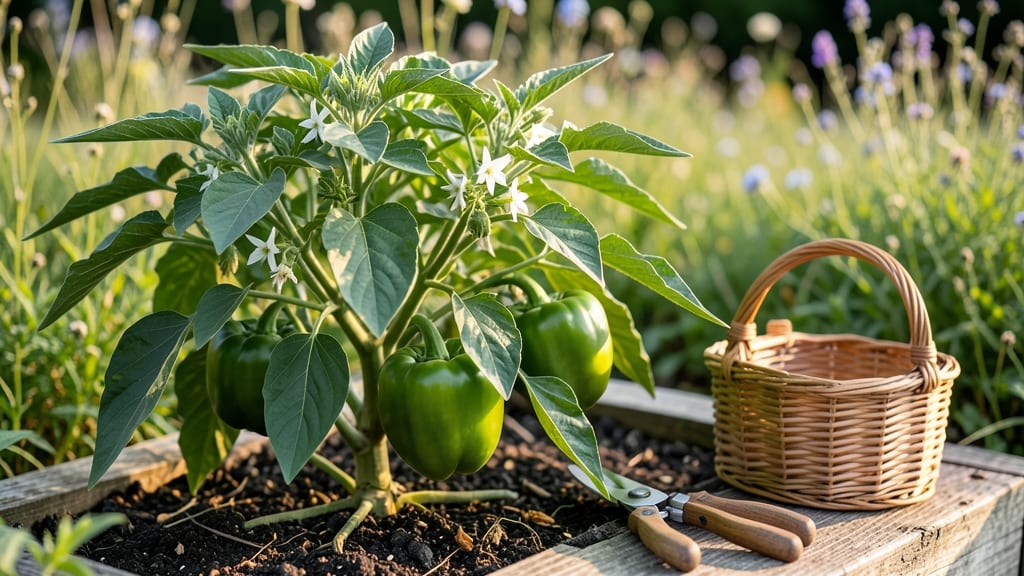
Green bell peppers are ready to pick when they reach 3-4 inches in length, boast a deep, glossy green color, and yield slightly when gently pressed 🌶️.
Picture this: you’ve nurtured your plants all season, and now the moment of truth arrives. One wrong move, and you could end up with peppers that are either too small for flavor or too mature for crispness. The key is knowing the exact cues—because timing directly impacts taste and texture.
Most gardeners focus on color or size alone, but the real secret lies in a combination of visual and tactile clues. A ripe pepper won’t just look perfect; it’ll feel just right too. Miss these signs, and you might harvest too early (underdeveloped) or too late (bitter, wrinkled).
In this guide, I’ll walk you through the three must-check indicators—color, size, and texture—plus how to pick them properly to keep your plants producing all season. No more guesswork, just homegrown perfection.


How to tell when green bell peppers are ready to pick by color, size & texture
Green bell peppers are at their peak when they balance size, color, and texture perfectly. Unlike tomatoes, which soften as they ripen, bell peppers stay firm but develop subtle cues that signal readiness.
Ignoring these signs means missing out on the sweetest flavor and crispest texture—or worse, harvesting peppers that’ve already passed their prime. Let’s break down the three key indicators so you never guess again.
Most gardeners focus on color alone, but size and texture are equally critical. A pepper might look green but still be underdeveloped inside, or it could be overripe with a waxy, dull skin.
The trick is combining all three checks: a deep green hue, 3-4 inches in length, and a skin that yields slightly when pressed. Master these cues, and you’ll harvest peppers at their absolute best every time.
| Indicator | Ready Pepper | Not Ready Pepper | Pro Tip |
|---|---|---|---|
| Color | Deep, vibrant green (no green at stem) | Pale or uneven green with green stem | Check stem end—it should turn white/brown when ripe. |
| Size | 3-4 inches long, 2-3 inches wide | Under 3 inches or lopsided shape | Measure with your thumb—ripe peppers fit 3 thumbs end-to-end. |
| Texture | Firm but slightly yielding when pressed | Hard as a rock or wrinkled | Gently squeeze—ripe peppers feel like a soft baseball. |
| Stem | Snaps cleanly when twisted | Requires force to pull or tears | Twist gently—ripe stems break at the base easily. |
Let’s start with color, the most obvious clue. A ripe green bell pepper should be a deep, glossy green with no hint of yellow or brown at the stem end. Some varieties, like ‘Big Beautiful’ or ‘California Wonder’, develop a slightly waxy sheen when ready.
If the pepper looks dull or patchy, it’s not ripe yet. Pro tip: Hold the pepper up to a white surface—ripe peppers cast a rich green shadow, while unripe ones appear washed out.
Next, check the size. Most standard green bell peppers reach 3-4 inches in length and 2-3 inches in width at peak ripeness. Smaller peppers (under 3 inches) often have underdeveloped seeds and thinner walls, which means less flavor and a softer texture.
If you’re growing a mini bell pepper variety, like ‘Snackbell’, aim for 2 inches or slightly larger—but still firm to the touch.
Texture is where most gardeners go wrong. A truly ripe green bell pepper should feel firm but slightly yielding when you press it gently with your thumb. Think of it like testing a ripe avocado—just enough give to know it’s ready, but not mushy.
If the pepper feels rock-hard, it’s premature. If it’s wrinkled or leathery, it’s overripe. This tactile check is especially important for container-grown peppers, which can ripen unevenly due to inconsistent watering.
Don’t overlook the stem—it’s a hidden clue to ripeness. When a green bell pepper is ready, the stem should snap cleanly when you twist it gently. If you have to pull hard or the stem tears, the pepper isn’t ripe.
This trick works for all colors, including red, yellow, or purple varieties. Twisting also prevents damage to the plant, encouraging more peppers
Common mistakes that make you pick green bell peppers too early (or too late)
Even experienced gardeners sometimes struggle with timing when harvesting green bell peppers. Picking too early means sacrificing flavor and crispness, while waiting too long can lead to tough, bitter peppers.
The key is recognizing subtle but critical signs that your peppers are at their peak. Many gardeners miss these cues, especially when dealing with fast-growing varieties or unpredictable weather.
One of the biggest mistakes is relying solely on color as the only indicator. While vibrant green is a good start, it’s not enough. You also need to check for firmness, size, and stem maturity.
For example, a pepper that’s bright green but still small or spongy inside isn’t ready. Skipping these checks can mean harvesting peppers that are underdeveloped or overripe, both of which affect taste and texture.
⚠️ callout warning ⚠️
🚨 Warning Signs You’re Picking Too Early or Too Late
Too Early: Thin walls, underdeveloped seeds, pale or uneven color, skin that feels firm and doesn’t yield when pressed.
Too Late: Dull or faded color, wrinkled skin, bitter taste, stem that’s hard to twist off, or peppers that feel hollow when squeezed.
Pro Tip: Always check for a white or brown stem end—this is your best indicator of readiness!
Another common error is harvesting peppers when the stem end remains green. A fully ripe pepper will have a white or brown stem end, signaling it’s time to pick.
If you ignore this, you might end up with peppers that are still growing on the vine but never reach their full potential. This is especially true for heirloom varieties, which often take longer to mature than hybrid types.
Overripe peppers are just as problematic as underripe ones. When left too long on the plant, they develop wrinkled skin, dull color, and a bitter taste. These peppers are often tough and less flavorful, making them less enjoyable to eat.
To avoid this, I recommend checking your plants every 2-3 days once they start flowering. This frequent monitoring helps you catch the perfect harvest window before peppers overstay their welcome.
Environmental factors can also trick you into picking at the wrong time. For instance, hotter temperatures or inconsistent watering can speed up ripening, making peppers ready sooner than expected. Conversely, cool nights or cloudy weather can slow down maturation.
Pay attention to these conditions and adjust your harvesting schedule accordingly. If you notice peppers ripening faster than usual, plan to check them more often.
Finally, don’t forget that variety matters. Some green bell pepper varieties, like ‘Early California Wonder’, mature faster than others, such as ‘Big Beef’. Always refer to the seed packet or plant tag for estimated days to maturity.
This gives you a baseline to work with, even though environmental factors will still play a role. By combining this information with the visual and tactile cues, you’ll be well on your way to harvesting perfectly ripe green bell peppers every time.