
Plants
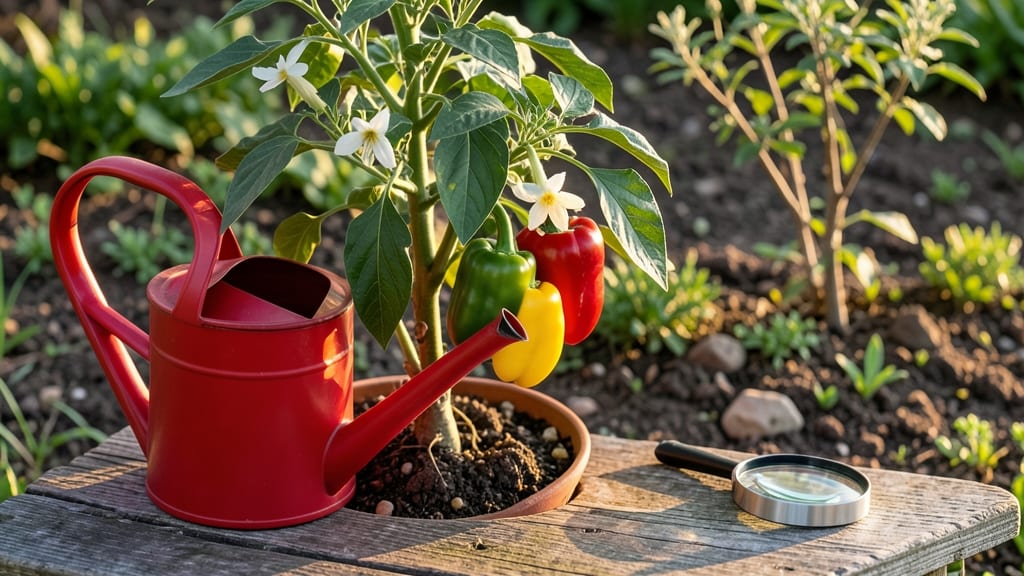
Your pepper plant leaves curling up isn’t a death sentence—it’s a clear signal that something needs adjusting. 🌱 I’ve seen this happen with both overwatered plants and tiny spider mites hiding on the undersides of leaves, and the fixes are simpler than you’d think.
First, check the soil moisture: curling often means either too much water (root rot) or too little (stress). Stick your finger an inch deep—if it’s soggy, hold off on watering; if bone-dry, give it a deep drink.
Then inspect the leaves for pests: spider mites leave fine webbing and tiny specks, while aphids cluster like cotton balls. The good news? Most curling fixes themselves in 3-5 days with the right care.
Prune affected leaves, adjust your watering schedule, and spray with neem oil if pests are the culprit. Prevention is easy: mulch to retain moisture, use row covers for wind protection, and keep an eye on the undersides of leaves weekly.
For stubborn cases, consult a local extension office—they can test for nutrient deficiencies or fungal issues that might need targeted solutions. But in 90% of cases, you’ll have your peppers thriving again before you know it.
Root Causes Of Curling Leaves
When your pepper plant’s leaves start curling upward like tiny green question marks, it’s usually a cry for help from the roots—or the environment around them. Understanding the why behind this behavior is the first step to saving your plant.
Let’s break down the most common culprits, backed by science, so you can diagnose and fix the issue fast.
Pepper plants thrive in warmth, but too much heat—or sudden temperature swings—can cause leaves to curl upward as a protective response. Here’s how it works:
- Excessive Heat (Above 90°F/32°C): High temperatures increase transpiration (water loss through leaves) faster than the roots can absorb water. The plant’s cells lose turgor pressure (the rigid structure that keeps leaves flat), causing them to curl inward to reduce surface area and minimize water loss.
This is a physiological drought response, even if the soil is moist.
- Cold Stress (Below 50°F/10°C): Chilly nights or drafts can disrupt cell metabolism, leading to chlorophyll breakdown and curled, stiff leaves. Peppers are tropical plants—they’re not built for cold snaps!
- Sunburn: Intense afternoon sun (especially in hot climates) can scorch leaves, causing them to curl and crisp at the edges. This is common in greenhouse-grown peppers or those suddenly moved from shade to full sun.
💡 Pro Tip:
- Shade cloth (30-50%) can protect peppers from midday heat.
- Mulch (straw or black plastic) keeps soil temps stable.
- Avoid cold drafts near windows or AC vents—peppers hate sudden temperature drops!
Water is the lifeblood of pepper plants, and improper hydration is the #1 reason leaves curl. The science behind it:
- Underwatering (Drought Stress): When soil dries out, the plant can’t pull enough water to maintain cell turgor. Leaves curl upward and inward to conserve moisture, a survival tactic called hygroreception. You’ll also see:
- Dry, crispy edges (not just curling).
- Wilting that doesn’t bounce back when watered.
- Overwatering (Root Suffocation): Soggy soil cuts off oxygen to roots, leading to anaerobic conditions. Roots struggle to absorb water and nutrients, causing leaf curl as a symptom of nutrient starvation. Overwatered peppers may also show:
- Yellowing leaves (chlorosis).
- Mushy stems (root rot setting in).
- Inconsistent Watering: Pepper plants hate moisture swings. Alternating between drought and overwatering confuses the plant, leading to cellular stress and curling. Aim for 1-1.5 inches of water per week, keeping soil evenly moist (not soggy or bone-dry).
💡 Pro Tip:
- Check soil moisture with your finger—top 1-2 inches should be dry before watering.
- Use drip irrigation or soaker hoses to deliver water slowly and deeply.
- Avoid wetting leaves (especially in humid climates) to prevent fungal diseases.
Not all curling leaves are due to environmental stress—tiny invaders can wreak havoc on your peppers. Here’s how pests and pathogens trigger this response:
- Spider Mites (🕷️) These microscopic pests suck sap from leaf undersides, causing:
- Stippling (tiny white dots).
- Leaves curling upward to protect damaged tissue.
- Webbing on stems (a red flag!). Why it happens: Mites inject toxic saliva that disrupts plant hormones, leading to abnormal growth patterns.
- Aphids (🐜) Clusters of these sap-sucking insects on new growth cause leaves to curl and pucker. They excrete honeydew, which attracts sooty mold, further stressing the plant.
- Fungal Infections (e.g., Early Blight, Powdery Mildew) Fungi like Alternaria solani (early blight) cause:
- Dark spots with concentric rings on leaves.
- Leaves curling upward to limit fungal spread. Why it happens: Fungal spores clog stomata (leaf pores), disrupting gas exchange and forcing leaves to curl as a defense.
- Viral Infections (e.g., Tobacco Mosaic Virus) Viruses often spread via aphids or contaminated tools and cause:
- Mosaic patterns (light/dark green patches).
- Stunted growth and curled leaves. Why it happens: Viruses hijack plant cells, altering protein production and leading to malformed leaves.
💡 Pro Tip:
- Isolate infected plants to prevent spread.
- Spray with neem oil (for mites/aphids) or copper fungicide (for early blight).
- Remove severely damaged leaves to redirect energy to healthy growth.
Peppers are heavy feeders, and nutrient imbalances can cause leaves to curl as the plant struggles to function. Key culprits:
- Nitrogen Deficiency (💚)
- Symptoms: Older leaves curl downward (not upward), turn yellow, and may drop.
- Why it happens: Nitrogen is crucial for chlorophyll production. Without it, leaves can’t photosynthesize efficiently, leading to weak, curling tissue.
- Potassium Deficiency (⚡)
- Symptoms: Marginal leaf scorch (brown edges) + upward curling of younger leaves.
- Why it happens: Potassium regulates water balance and enzyme activity. A deficiency causes osmotic stress, making cells lose water and curl.
- Calcium Deficiency (🧀)
- Symptoms: Young leaves curl upward, develop blistered or cupped edges, and may show necrotic spots.
- Why it happens: Calcium strengthens cell walls. Without it, cells collapse or distort, leading to curling.
- Salt Buildup (From Fertilizer Overuse)
- Symptoms: Crispy, curled leaves with white crust on soil surface.
- Why it happens: Excess salts disrupt water absorption, causing osmotic stress and leaf curling.
💡 Pro Tip:
- Test soil pH (peppers prefer 6.0-6.8). Adjust with lime (to raise pH) or sulfur (to lower pH).
- Use balanced fertilizer (e.g., 10-10-10) and flush soil every 4-6 weeks to prevent salt buildup.
- Epsom salt (magnesium sulfate) can help with potassium/magnesium deficiencies (1 tbsp per gallon of water, monthly).
Even if your peppers are watered and fed, physical stressors can cause curling:
- High Wind Exposure
- Why it happens: Wind dries out leaves faster than roots can replace moisture, leading to transpirational stress. Leaves curl to reduce surface area and prevent further water loss.
- Fix: Use windbreaks (burlap screens, straw bales) or plant in sheltered spots.
- Low Humidity (Below 40%)
- Why it happens: Dry air increases evaporation from leaves, forcing them to curl as a desiccation defense. Common in indoor or arid climates.
- Fix: Use a humidifier (for indoor plants) or group peppers with other plants to create a microclimate.
Not sure which cause fits your plant? Run through this symptom guide:
| Symptom | Likely Cause | Action Steps |
|---|---|---|
| Leaves curl upward + crispy edges | Underwatering or heat stress | Water deeply, provide afternoon shade |
| Leaves curl + yellowing | Overwatering or nitrogen deficiency | Check soil moisture, fertilize with nitrogen |
| Leaves curl
Quick Fixes for Curling Pepper Leaves
Now that you know the likely culprits behind your pepper plant’s curled leaves—whether it’s pests, water woes, temperature swings, or nutrient deficiencies—let’s roll up our sleeves and get those leaves perking up again! 🌱✨ Below are practical, step-by-step solutions tailored to each cause, plus pro tips to keep your peppers thriving long-term.
If spider mites, aphids, or whiteflies are to blame, act fast before they sap your plant’s strength.
🍳 Step 1: Isolate & Inspect
- Move the plant away from others to prevent spreading.
- Shake the plant gently over a white tray or newspaper—bugs will drop, revealing their presence.
👨🍳 Step 2: Blast Them Off
- Water blast: Use a strong stream of water (from a hose or spray bottle) to knock off pests.
Do this early in the day so leaves dry quickly. - Neem oil spray: Mix 1 tsp neem oil + 1 tsp mild soap + 1 quart water.
Spray undersides of leaves (where pests hide) every 5–7 days until gone. - Insecticidal soap: Spray directly on pests (test on a small leaf first). Reapply every 3–5 days.
🥘 Step 3: Trap & Prevent
- Sticky traps: Place yellow sticky cards near the plant to catch flying pests like whiteflies.
- Beneficial insects: Release ladybugs or lacewings (available at garden centers)—they love munching on aphids and mites.
- Diatomaceous earth (DE): Sprinkle food-grade DE lightly on soil (not leaves).
It dehydrates pests but is safe for plants.
💡 Pro Tip: Check soil moisture—dry conditions attract spider mites! Keep soil evenly moist to deter them.
Overwatering or underwatering can curl leaves faster than a bad joke at a gardening convention. Let’s dial it in.
💧 Step 1: Check Soil Moisture
- Stick your finger 1–2 inches into the soil. If it’s:
- Dry: Water deeply until it drains from the bottom.
- Soggy: Let it dry out before watering again.
📊 Step 2: Adjust Your Watering Routine
- Morning watering: Water early in the day (6–9 AM) so leaves dry quickly, reducing fungal risks.
- Drip irrigation: Use a soaker hose or drip system to deliver water slowly at the roots (avoids wetting leaves).
- Mulch: Add 2–3 inches of mulch (straw or shredded leaves) to retain moisture and regulate temperature.
✨ Step 3: Drainage & Containers
- Pot-bound plants? Ensure pots have drainage holes—no exceptions!
- Clay pots > plastic: They dry out faster, preventing root rot.
- Well-draining soil: Mix potting soil with perlite or vermiculite (20% additive) for better aeration.
💡 Pro Tip: Yellowing leaves + curled edges? You’re likely overwatering. Brown, crispy edges? Time to hydrate!
Pepper plants are tropical divas—they hate sudden temperature drops or dry air.
🏡 Step 1: Shield from Drafts & Cold
- Move plants away from AC vents, doors, or windows that get chilly at night.
- Use a frost cloth if temps dip below 50°F (10°C) overnight.
💦 Step 2: Boost Humidity (Without the Fungus)
- Pebble trays: Place the pot on a tray of pebbles + water (plant sits above water).
- Misting: Lightly mist leaves early in the day (avoid evenings to prevent mildew).
- Group plants: Cluster peppers together to create a mini humid zone.
🌡️ Step 3: Heatwave Help
- Shade cloth: Use 30–50% shade cloth if temps exceed 90°F (32°C).
- Whitewash pots: Paint pots white to reflect heat (reduces soil temp by up to 10°F).
💡 Pro Tip: Curling + wilting in heat? It’s not just thirst—it’s heat stress. Provide afternoon shade to recover.
Curling from lack of nitrogen, potassium, or magnesium? Let’s get those nutrients flowing.
🥗 Step 1: Soil Test First
- Grab a DIY soil test kit (or send a sample to a local extension office) to confirm deficiencies.
📊 Step 2: Fertilizer Fixes
| Deficiency | Signs | Solution |
|---|---|---|
| Nitrogen (N) | Yellow lower leaves, stunted growth | Use balanced fertilizer (10-10-10) or compost tea. |
| Potassium (K) | Brown leaf edges, weak stems | Feed with banana peel tea or potassium-rich fertilizer (like 5-10-10). |
| Magnesium (Mg) | Yellow patches between veins | Sprinkle Epsom salt (1 tbsp/gallon water) every 2 weeks. |
| Calcium (Ca) | Curling + distorted new leaves | Use crushed eggshells or calcium nitrate (follow package rates). |
🍎 Step 3: Organic Boosters
- Compost: Mix 1–2 inches into the topsoil for a slow-release nutrient boost.
- Fish emulsion: Dilute 1 tbsp/gallon water and spray on leaves (great for nitrogen).
- Worm castings: Work ½ cup into the soil for a gentle, all-purpose fertilizer.
💡 Pro Tip: Over-fertilizing burns roots! Always water soil before applying fertilizer to dilute it.
- Water: Check soil moisture daily in extreme heat, every 2–3 days in mild weather.
- Pests: Inspect undersides of leaves weekly—early detection = easy fixes.
- Temperature: Avoid placing peppers near drafty windows or heaters.
- Fertilizer: Stick to a schedule (every 4–6 weeks) and reduce in winter.
- Prune: Remove yellow/curled leaves to redirect energy to healthy growth.
Final Thought: Most curling issues are fixable with patience and precision—whether it’s a quick neem oil spray or adjusting your watering schedule. 🚀 Once you’ve tackled the root cause (literally!), your pepper plants will bounce back with stronger, straighter leaves—and maybe even some juicy peppers on the way!
Frequently asked questions
Why are my pepper plant leaves curling upward instead of downward?
Upward curling usually signals environmental stress like heat, low humidity, or underwatering. Unlike downward curling (often from overwatering), upward curling is your plant’s way of reducing water loss. Check for crispy edges—if present, it’s likely thirst. Spider mites also cause upward curling by damaging leaf tissue.
Can I save my pepper plant if the leaves are already curled?
Yes! Act fast by addressing the root cause. Prune severely curled leaves to redirect energy, then adjust watering (keep soil evenly moist), protect from extreme temps, and check for pests. With proper care, new growth should straighten in 3-7 days. If curling persists, test soil pH or consult a local extension office.
Is neem oil safe to use on peppers if I suspect spider mites?
Neem oil is organic, non-toxic, and effective against spider mites, aphids, and whiteflies. Mix 1 tsp neem oil + 1 tsp mild soap + 1 quart water, then spray undersides of leaves where pests hide. Reapply every 5-7 days until mites disappear. Always test on a small leaf first to avoid sensitivity.
Will curled pepper leaves straighten out on their own?
Only if the stressor is temporary (like a brief heatwave). For permanent fixes, you must correct the issue—whether it’s adjusting water, improving humidity, or treating pests. Curled leaves won’t recover fully unless the underlying problem is resolved. Pruning helps, but new growth depends on resolving the root cause.
How do I tell if my pepper plant is curling from heat or pests?
Check for these clues: Heat stress causes crispy edges + curling in full sun; pests (like spider mites) leave fine webbing and tiny specks on leaf undersides. Hold a white sheet under the plant and shake it—if bugs fall, it’s pests. Heat-stressed plants often recover at night, while pest damage worsens.