
Plants
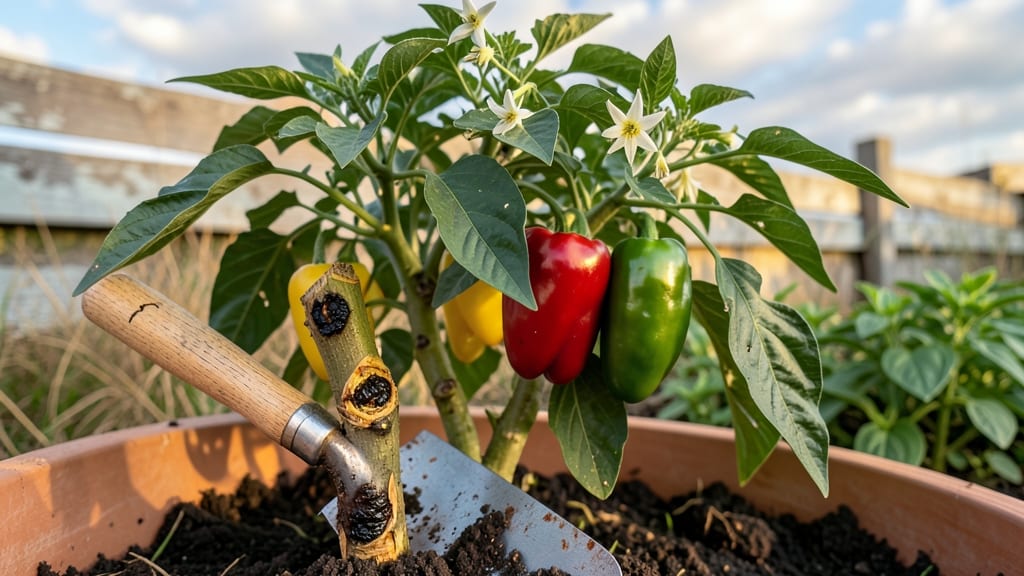
That pepper plant stem turning black isn’t just dirt—it’s a fungal blight that can kill your plants in days. 🌱 I’ve lost entire harvests to this silent killer, but I’ve also saved plants with a simple vinegar spray. that works faster than store-bought fungicides.
The key is acting before the rot spreads past the stem.
Most cases start with overwatering or crowded plants, creating the perfect damp, dark conditions for black rot to take hold. You’ll notice dark, sunken patches on stems first, then wilting leaves and a foul smell as the fungus spreads.
The good news? This isn’t a death sentence—it’s a fixable problem with the right tools and timing.
Within 24 hours of treatment, you’ll see new growth pushing through, and the black spots will start to fade. The spray is cheap, non-toxic, and works by creating an environment where the fungus can’t survive.
Plus, it’s a preventive measure you can use every two weeks to keep your peppers thriving all season.
Whether you’re dealing with a single plant or a full garden, this method scales easily. The secret is consistency—check your plants weekly for early signs, and don’t wait until the stems are completely black to act. Your harvest depends on it.
Root Causes Behind Darkened Stems
Understanding why your pepper plant’s stem is turning black starts with identifying the underlying triggers—each with its own set of clues and fixes. Below, we break down the most common culprits, explained in clear, actionable terms so you can diagnose (and reverse!) the damage.
Blackened stems often signal waterlogged roots, a classic sign of overwatering or compacted soil.
Pepper plants thrive in well-draining soil, but when excess moisture lingers, it creates the perfect breeding ground for: - Root rot (from Phytophthora or Pythium fungi): These pathogens thrive in soggy conditions, cutting off nutrient flow and causing stems to darken and soften. - Oxygen deprivation: Roots suffocate when submerged, leading to cellular breakdown and blackened tissue.
🔍 How to spot it:
- Soil feels damp or smells sour.
- Stems appear mushy or ooze when touched.
- Yellowing leaves accompany the blackening.
✨ Pro tip: Stick your finger 1–2 inches into the soil—if it’s wetter than a damp sponge, it’s time to adjust your watering routine.
Fungi like black spot (Alternaria), anthracnose, or stem rot (Botrytis) love warm, humid conditions and can turn stems black in patches or uniformly.
These pathogens: - Clog stomata (leaf pores), blocking gas exchange and causing wilting. - Secrete toxins that disrupt plant cell structure, leading to dark, sunken lesions. - Spread via splashing water or contaminated tools.
🔍 How to spot it:
- Black spots with fuzzy edges on stems/leaves.
- Stems feel slimy or develop a grayish mold.
- Fungus often appears after high humidity or rain.
💡 Fix it fast: Isolate the plant and apply a 1:1 vinegar-water spray (see our fix guide for ratios) to disrupt fungal spores.
Bacteria like Xanthomonas or Pseudomonas cause black, oozing cankers on stems, often accompanied by:
- Bacterial leaf spot: Tiny black dots on leaves that spread upward.
- Stem girdling: Bacteria encircle the stem, cutting off water flow and turning it black above the infection.
🔍 How to spot it:
- Sticky, dark exudate on stems.
- Wilting despite moist soil (bacteria block xylem vessels).
- Often starts at leaf nodes or pruning wounds.
🔥 Critical action: Prune infected stems below the blackened area with sterilized shears (soak in 10% bleach solution for 10 mins) and dispose of clippings in the trash—not compost!
Pepper plants are sensitive to sudden temperature swings. Cold snaps or heatwaves can cause:
- Chilling injury: Blackened, water-soaked stems from temps below 50°F (10°C), disrupting cell membranes.
- Heat stress: Wilting and blackening in stems when temps exceed 90°F (32°C), leading to sun scald.
🔍 How to spot it:
- Blackening occurs uniformly along stems (not spotty).
- Leaves may show crispy edges or yellowing.
- Often happens after moving plants indoors/outdoors abruptly.
🌿 Solution: Gradually acclimate plants to temperature changes (harden off seedlings) and use shade cloth in extreme heat.
- Mechanical injury: Bruised stems from rough handling or wind can turn black as cells die.
- Pests like aphids or spider mites: Their saliva introduces bacteria/fungi, accelerating stem decay.
- Herbicide drift: Chemical burns can cause blackened, necrotic patches on stems.
🔍 How to spot it:
- Blackening follows a linear pattern (e.g., along a wound).
- Presence of pests (sticky residue, webbing).
- No fungal/bacterial signs (just dry, blackened tissue).
🛡️ Prevent it: Use row covers for wind protection and inspect plants weekly for pests. For chemical burns, flush stems with water immediately.
Quick Fixes for Blackened Pepper Stems
When your pepper plant’s stems start turning black, acting fast can save your harvest—and your sanity. Below are targeted solutions for the most common causes, along with preventive tips to keep your plants thriving.
Think of this as your emergency repair guide, complete with step-by-step fixes and long-term strategies to avoid future outbreaks.
Black, mushy stems with a fuzzy growth? You’re likely dealing with fungal blight (like Phytophthora or Fusarium). Here’s how to tackle it:
🔥 Step 1: Prune the Damage
- 🔪 Use sterilized pruners (wipe with rubbing alcohol) to cut off blackened stems at least ½ inch below the affected area.
- 🗑️ Dispose of infected plant debris in the trash (not compost)—fungus can survive in soil.
🍳 Step 2: Apply a Vinegar Spray (Natural Fungicide)
Mix 1 gallon of water + 1 cup white vinegar (5% acidity) + 1 tbsp baking soda + 1 drop dish soap (as a surfactant).
Spray early in the morning (avoid leaves to prevent burns). - ⏰ Frequency: Every 3–5 days until new growth appears. - 💡 Pro Tip: Test a small leaf first—some plants are vinegar-sensitive!
🌡️ Step 3: Improve Airflow & Reduce Moisture
- 🌬️ Space plants 12–18 inches apart (crowding = fungus heaven).
- 💦 Water at the base (avoid overhead sprinkling) and water in the morning so leaves dry by night.
- 🌱 Elevate pots with bricks or saucers to prevent soggy soil.
🛡️ Prevention for Next Time
- 🌿 Rotate crops—don’t plant peppers in the same spot yearly.
- 🍅 Use copper fungicide (like Bonide) as a preventive spray every 2 weeks during rainy seasons.
- 🌱 Add compost or perlite to soil to improve drainage.
Black, squishy stems that smell rotten? Your plant is drowning. Fix it with these steps:
🚰 Step 1: Check the Soil
- 👆 Stick your finger 1–2 inches deep—if it’s damp, wait to water.
- 🧲 Use a moisture meter for accuracy (aim for 40–60% moisture).
🏗️ Step 2: Improve Drainage
- 🪨 Add perlite, vermiculite, or sand to heavy clay soil (20% mix).
- 🍃 Repot if needed into a container with drainage holes (terracotta is ideal).
- 🌱 Elevate pots to avoid water pooling.
⏳ Step 3: Adjust Watering Habits
- 💧 Water deeply but infrequently—peppers hate soggy roots!
- 🕒 Schedule: Water only when the top 1–2 inches of soil are dry.
- 🌧️ Mulch with straw (1–2 inches) to retain moisture without overwatering.
🛡️ Prevention Tips
- 🌱 Choose fast-draining soil mixes labeled for "container gardening."
- 🚿 Use a self-watering system (like drip irrigation) to avoid guesswork.
- ❄️ In cold climates, water less in winter—roots slow down!
Tiny holes, webbing, or chewed stems? Pests can introduce fungus or directly damage stems.
🕷️ Step 1: Identify the Culprit
- 🐜 Aphids: Sticky residue (honeydew) on leaves.
- 🕸️ Spider mites: Fine webbing on stems/leaves.
- 🐛 Cutworms: Cleanly cut stems at soil level (check at dusk!).
🧼 Step 2: Remove Pests Manually
- 💦 Spray pests off with a strong stream of water (aphids hate this!).
- 🍎 Wipe leaves with neem oil-soaked cotton balls (1 tbsp neem oil + 1 quart water).
- 🌙 Set up collars (toilet paper rolls cut in half) around young plants to block cutworms.
💡 Step 3: Introduce Beneficial Insects
- 🐞 Ladybugs (eat aphids) or 🕷️ lacewings (devour spider mites).
- 🌿 Plant companion herbs like basil or marigolds to repel pests.
🛡️ Prevention for Future
- 🌿 Inspect plants weekly (early detection = easier fixes!).
- 🌱 Use reflective mulch (aluminum foil) to deter cutworms.
- 🍋 Spray preventive neem oil every 2 weeks during pest season.
Blackened stems in sudden cold snaps or scorching heat? Your plant is in shock.
❄️ For Frost Damage
- 🔥 Cover plants with frost cloth or blankets if temps drop below 40°F (4°C).
- 🌱 Move potted peppers to a sheltered spot (garage, porch).
- ☀️ After frost, trim only dead tissue—healthy green stems will recover!
🔥 For Heat Stress
- 🌿 Provide shade cloth (30–50% coverage) during 100°F+ (38°C+) days.
- 💦 Increase watering slightly (but not soil sogginess).
- 🌱 Avoid fertilizing in extreme heat—focus on hydration first.
🛡️ Prevention Tips
- 🌱 Choose heat-tolerant varieties like Jalapeño or Serrano for hot climates.
- 🌡️ Use row covers in spring/fall for temperature swings.
- 🌱 Monitor weather forecasts and act 24 hours before a cold snap.
| Action | When to Do It | Tools Needed |
|---|---|---|
| Prune blackened stems | Immediately | Sterilized pruners |
| Apply vinegar spray | Every 3–5 days | Spray bottle, vinegar mix |
| Check soil moisture | Before watering | Finger or moisture meter |
| Inspect for pests | Weekly | Magnifying glass, neem oil |
| Adjust watering schedule | Ongoing | Watering can, timer |
💡 Remember: The key to saving your pepper plant is speed + consistency. Start with the most likely cause, act quickly, and monitor daily for improvements. With these fixes, your plant should bounce back—and next season, you’ll be a black-stem blight boss! 🌱💪
Frequently asked questions
Why does my pepper plant stem turn black suddenly?
Blackened stems usually signal fungal infections (like Phytophthora or Botrytis), bacterial rot, or root suffocation from overwatering. These issues thrive in damp, crowded conditions. Check for mushy stems, foul odors, or fuzzy growth—these are key red flags.
Can I save my pepper plant if the stem is already black and mushy?
Yes, but act fast! Prune the blackened stem ½ inch below the damage with sterilized shears, then treat with a vinegar spray (1:1 vinegar-water mix). If the rot is deep, the plant may not recover—but new growth often sprouts from healthy stems.
How often should I water pepper plants to prevent black stems?
Water only when the top 1–2 inches of soil are dry—peppers hate soggy roots! Use drip irrigation or water at the base in the morning to avoid fungal growth. Mulch with straw to retain moisture without overwatering.
Is vinegar safe to use on pepper plants for black stem treatment?
Yes, but use it carefully! Mix 1 cup white vinegar + 1 gallon water + 1 tbsp baking soda and spray only on affected stems (avoid leaves). Test a small area first—some plants are vinegar-sensitive. Reapply every 3–5 days until new growth appears.
What’s the difference between black stems from fungus vs. overwatering?
Fungal blackening appears as dark spots with fuzzy edges and often smells musty, while overwatering causes uniform blackening with mushy, rotten stems and a foul odor. Check soil moisture—if it’s damp, it’s likely root rot.