
Picking
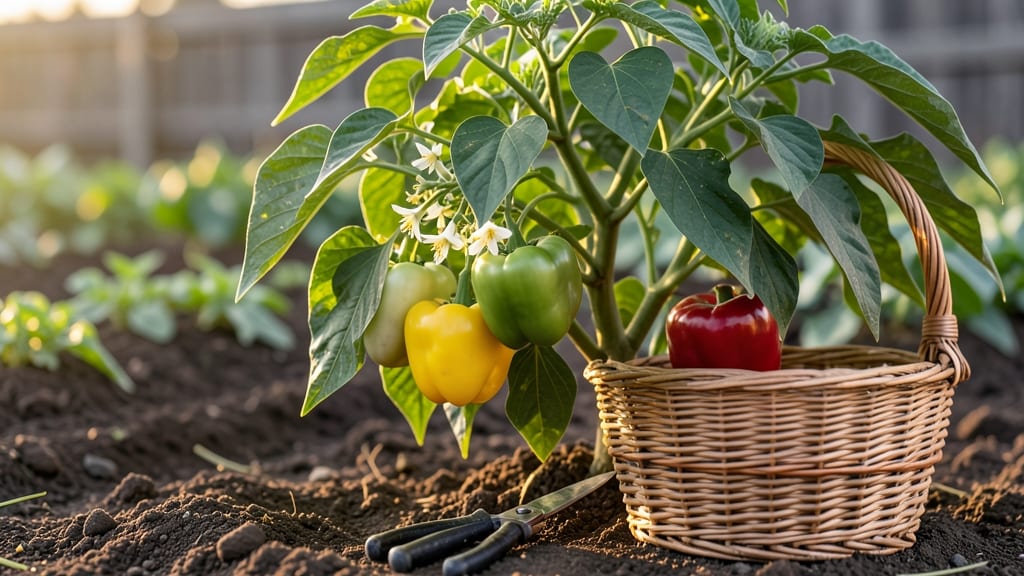
To pick bell peppers from your garden at the perfect moment means capturing their sweetest, most vibrant flavor—before they turn bitter or mushy.
Picture this: you’ve nurtured your 🌶️ plants all season, and now the pods are changing color. But how do you know when they’re truly ready? Waiting too long can ruin the harvest, while picking too soon leaves you with underripe, bland peppers.
Color isn’t the only clue—firmness, size, and even the stem’s appearance play a role. In USDA Zone 6a, where frost-free days stretch from April to October, timing matters even more.
Below, I’ll walk you through the exact signs to watch for, seasonal adjustments, and how to harvest without damaging your plants—so you can enjoy homegrown peppers at their peak.

Bell pepper ripeness stages by color: when to harvest for maximum flavor
Harvesting bell peppers at the right color stage transforms their flavor from mild to sweet and complex. Unlike many vegetables, bell peppers continue ripening after picking, but their peak sweetness happens at specific color milestones.
Whether you're growing green, red, or yellow varieties, timing matters—each hue signals a different flavor profile and nutritional peak.
Most gardeners assume red bell peppers are the sweetest, but yellow and orange varieties often pack even more sugar content when fully ripe. Meanwhile, green bell peppers—commonly harvested early—can turn bitter if left too long on the vine.
Understanding these color-coded stages ensures you never miss the perfect harvest window for your favorite recipes or storage plans.
| Color Stage | Days to Ripen | Flavor Profile | Harvest Window | Best For |
|---|---|---|---|---|
| Green | 60-75 days | Mild, slightly grassy | Early summer (July-August) | Pickling, stir-fries |
| Yellow | 80-90 days | Sweet, fruity, slightly tangy | Mid-summer (August-September) | Salads, roasting |
| Orange | 85-95 days | Balanced sweetness, carrot-like | Late summer (September) | Stuffing, grilling |
| Red | 90-120 days | Deepest sweetness, slightly smoky | Fall (September-October) | Raw dishes, preserving |
| Purple | 90-100 days | Earthy, slightly floral | Late summer (September) | Gourmet dishes, roasting |
If you're growing green bell peppers, harvest them when they reach 3-4 inches in diameter and the skin feels firm but slightly yielding. These peppers are typically picked younger to maintain their crisp texture, but leaving them too long can make them leathery or bitter.
The stem end should turn from green to yellowish-brown—this is your cue to pick.
For red bell peppers, wait until the skin turns a deep, vibrant red with no green remnants near the stem. These peppers are sweeter when fully ripe, thanks to higher sugar content developed during the ripening process.
In cooler climates, red peppers may need extra time to ripen fully, so consider harvesting yellow or orange varieties if fall arrives early.
Yellow and orange bell peppers often get overlooked, but they offer a unique flavor bridge between green and red. Yellow peppers are sweeter than green but less intense than red, while orange peppers provide a caramel-like depth. Harvest these when their color is even and bright, and the skin is smooth to the touch. In my garden, yellow peppers always ripen 2-3 weeks earlier than red ones, making them a great early-season harvest option.
Don’t forget about purple bell peppers, a heirloom favorite that ripens later in the season. These peppers start green, transition to lavender-purple, and develop a deep, almost black-purple hue when fully ripe. Their flavor is earthier and more complex than red peppers, with hints of floral notes.
Harvest them when the color is consistent and vibrant, and the skin is thick and glossy—this ensures maximum flavor intensity.
Regional climate differences affect ripening timelines. In warmer zones (USDA 9-11), bell peppers may ripen faster and
Signs your bell peppers are ready to pick (beyond just color)
Harvesting bell peppers at the right time ensures maximum flavor and sweetness. While color is the most obvious cue, size, firmness, and stem separation are equally important. A 3-4 inch diameter is ideal, but don't rely solely on measurements—your fingers will tell you more.
Gently press the pepper with your thumb. It should feel firm but slightly yielding, like a ripe avocado. If it gives too easily, it's overripe; if it feels rock-hard, it needs more time. This tactile test is my go-to trick for perfect timing.
⚠️ callout warning ⚠️
Look closely at the stem where the pepper attaches. A dry, brown stem that snaps cleanly when bent is a sure sign of readiness. If the stem is still green or wet, leave it on the plant—it needs more time.
This is where many gardeners make mistakes by picking too early.
Size matters more than you think. Most bell pepper varieties reach 3-4 inches in diameter at maturity. If your peppers stay small (under 2 inches), they're likely underripe or a compact variety. Measure a few to get a sense of what "full size" looks like for your specific plants.
Don't ignore the glossy sheen on mature peppers. A healthy, ripe bell pepper has a smooth, slightly waxy surface. Dull or wrinkled skin means it's past its prime. This subtle detail often separates perfect peppers from those that need to be composted.
For multi-colored varieties (like rainbow bell peppers), harvest when each pepper reaches its deepest, most vibrant hue. Mixed colors on a single pepper mean it's not fully mature. Patience here pays off with sweeter, more flavorful results every time.